
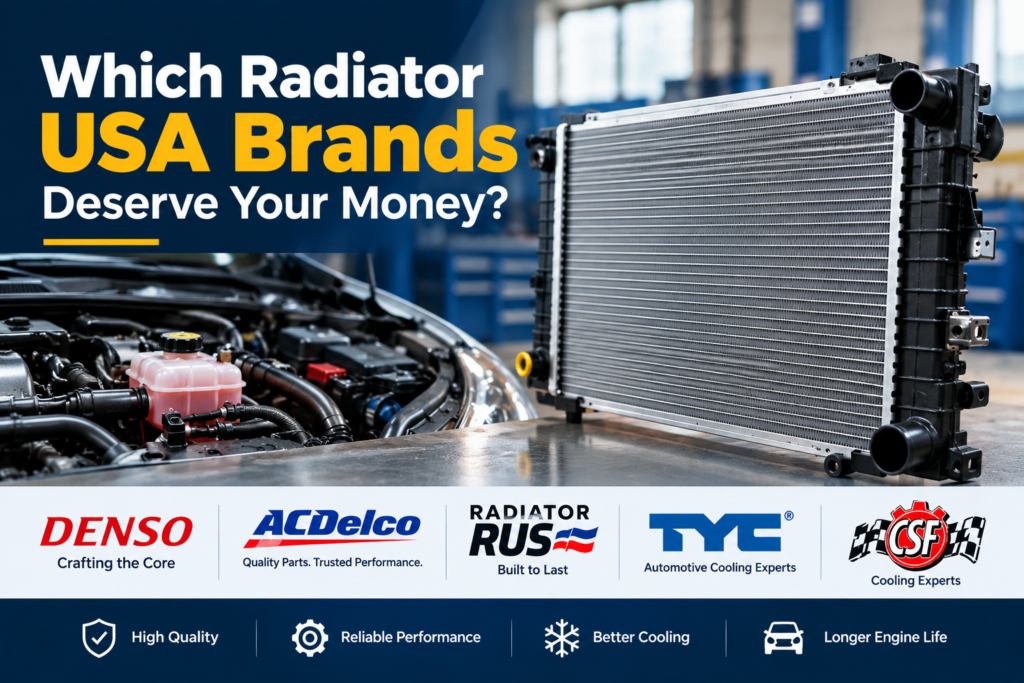
Meta description: Compare top American-made radiator brands. Pick aluminum or copper-brass, match your vehicle, and spot a faulty radiator early.
Primary keyword: radiator usa
Related terms: American-made radiator, aluminum radiator, copper-brass radiator, Griffin, Be Cool, US Radiator, DeWitts, Cold Case, LS swap radiator
You need a radiator that survives heat, traffic, and years of hard use. Which American brand delivers that? Read on to compare brands, materials, fitment, and failure signs.
What Does an Automotive Radiator Do?
A radiator moves engine heat into the air. Fuel combustion creates far more heat than the engine turns into power. Engineers commonly estimate that roughly one-third of fuel energy leaves through the coolant. The radiator must shed that heat on every drive.
Coolant flows through thin tubes that carry fins. The fins give heat a large surface to escape from. Fans pull air across the core, and the cooled fluid returns to the engine. The water pump, hoses, and thermostat keep that loop in motion.
Why does the loop matter so much? A weak radiator lets coolant boil and expand. A hose or head gasket often fails first. The engine then overheats and stops.
Why Should You Choose a Radiator Made in the USA?
American-made radiators offer three practical benefits.
- Fit. Many US builders design for classic and swapped vehicles that import brands skip.
- Support. You can call a tech specialist and talk through measurements. JEGS runs a toll-free line at 1-800-345-4545 for fitment help.
- Build quality. Domestic shops often use heavier tanks, cleaner welds, and stronger end caps.
Do you need an American-made part for a daily driver? Probably not. Do you own a muscle car, hot rod, or tow rig? Then origin matters more. Those builds stress the coolant system harder than stock vehicles do.
Read each label with care. Some products use imported cores and domestic assembly. Ask the seller where the core is built and which warranty covers it.
Which Made-in-USA Radiator Brands Stand Out?
Here are the names you will meet most often.
Griffin Radiators. Griffin sells ExactFit, PerformanceFit, and ClassicCool lines. Each line targets a different level of fitment work. You can find LS-swap units, Jeep Wrangler units, and universal cores.
Be Cool Radiators. Be Cool makes the Aluminator line for classic muscle cars. The 1967-69 Camaro and Firebird version fits small and big block engines. It lacks provision for transmission or oil cooler lines. You must also relocate the voltage regulator.
US Radiator. The company lists a base in Alabama. It sells copper, brass, and aluminum options. Its Desert Cooler series and Tripleflow cores draw the most attention. Check the catalog for your exact vehicle.
DeWitts Radiators. DeWitts builds direct-fit aluminum radiators in Michigan. Corvette, hot rod, and muscle car owners know the name well.
Cold Case Radiators. Cold Case focuses on aluminum performance radiators at a lower price. Many models use a large two-row core.
Johnson’s Radiator Works. This Alabama shop favors copper-brass cores. It builds compact units for big engines in heavy traffic.
Where Can You Buy a Radiator in the USA?
Do you need a part this week? Pick a distributor with local stock.
- Performance Radiator. It lists over 30 locations and over 10,000 OE-engineered replacement parts for cars, diesel trucks, and farm equipment.
- AutoZone and O’Reilly. Both carry everyday replacements from brands such as Duralast, OSC, and Murray. You get local pickup, simple returns, and warranty support.
- Denso. Many buyers trust this OEM supplier for first-time fit. Denso is Japanese, so it falls outside the American-made group.
- JEGS. The store carries Griffin, AFCO, and Be Cool. Its staff help you plan upgrades.
Do you want a fast swap or a long-term upgrade? Pick a retail brand for speed. Pick a specialist brand for performance.
Aluminum or Copper-Brass: Which Core Should You Choose?
Aluminum weighs less. Copper conducts heat better. Both work well when you size them correctly.
| Factor | Aluminum | Copper-Brass |
| Weight | Lighter | Heavier |
| Heat conduction | About 205 W/m·K for pure aluminum | About 385 W/m·K for pure copper |
| Core design | Wider tubes hold more coolant in less space | Thinner tubes with dense fin packs |
| Repair | Hard to patch | Easy to solder |
| Best use | Modern builds, swaps, tight engine bays | Restorations, show cars, heavy idle traffic |
Core design, tube size, and fin density decide the winner. A well-built two-row aluminum core can outperform a weak copper core. Which one should you pick? Choose aluminum for most performance projects. Choose copper-brass when original looks matter or a shop must repair the core often.
Aluminum also needs care. It resists electrolysis only with a good ground and fresh coolant.
Which Radiator Fits Your Vehicle?
Match the radiator to the vehicle first. Match your goals second.
GM A, G, and F body cars with an LS swap. The Griffin PerformanceFit radiator covers 1968-1977 A body, 1978-1988 G body, and 1970-1981 F body cars. It includes a transmission cooler. The inlet sits top right, and the outlet sits bottom right.
1967-69 Camaro and Firebird. The Be Cool Aluminator fits original-style engine bays. Plan to move the voltage regulator.
2007-2017 Jeep Wrangler JK V6. The Griffin ExactFit unit targets automatic models. It has a top-left inlet and a bottom-right outlet. A transmission cooler is extra.
Classic cars and custom builds. The Griffin ClassicCool universal radiator measures 31 by 19 inches and is 3 inches deep. It uses a single-pass crossflow design and needs little modification. A transmission cooler is extra here too.
Does your car have an automatic transmission? Choose a radiator with a built-in cooler or add a separate one. Skip this step and you risk fluid heat damage.
How Do You Spot a Faulty Radiator?
Watch for these signs.
- A high temperature gauge. Stop the car at once. Extreme heat can wreck an engine in minutes.
- Coolant puddles. Check under the front of the vehicle. Bright green, orange, or pink fluid is the usual clue.
- Damaged fins. Bent or corroded fins cut airflow.
- Sludgy or rusty coolant. Corrosion and sediment often point to a clogged core.
- A hot engine with a steady coolant level. That pattern suggests a blockage inside the radiator.
S&P Global Mobility reports that the average US vehicle is now above 12 years old. Older vehicles gather more corrosion and more clogged cores. Do you own one? Inspect the coolant system once a year.
What Specs Should You Check Before You Buy?
Measure twice and order once. Collect these details first.
- Overall core size. Record height, width, and thickness.
- Inlet and outlet positions. Note the side for each.
- Mount style. Check brackets, shroud room, and fan fit.
- Transmission cooler. Decide if you need one built in.
- Row count and pass design. Single-pass crossflow suits most swaps.
- Cap pressure. Most systems use a 13 to 16 psi cap. Each psi raises the coolant boil point by roughly 3°F.
Do you plan a future engine upgrade? Buy for the power you will make later. A bigger core costs less than a second radiator.
Can You Get a Custom or Rare Radiator?
Yes. Specialist shops match unusual cores often. Owners of replica and low-production vehicles face this issue the most. One reader asked about a heater core for a 1981 Shay Model A replica. Another asked about a radiator with a built-in transmission cooler for a Taylor-Dunn utility vehicle.
Retailers cannot always supply such parts. A local radiator shop usually can. Take the old core and these measurements to the shop:
- Overall size
- Core thickness
- Inlet and outlet locations
- Mount style Some shops re-solder your original tanks onto a new core. You keep the original look and gain a fresh core. Want brand options first?
How Do You Install and Maintain a New Radiator?
Good installation protects your investment.
- Drain and flush the old system.
- Replace the hoses, clamps, and thermostat.
- Mix coolant 50/50 with distilled water unless the maker says otherwise. That mix protects against freezing to about -34°F.
- Fill the system slowly and bleed trapped air.
- Test the cap and replace it if it is weak.
- Confirm that the fans switch on at the right temperature.
- Recheck the level after the first heat cycle.
Use the correct coolant type for your radiator metal. Ground the engine well on aluminum systems. A poor ground invites electrolysis and early failure.
FAQ: What Do Buyers Ask Most About USA Radiators?
What is a radiator in America?
Most Americans mean the car part that cools the engine. The word also names a home heat unit, so read the context.
Where is the US Radiator company?
US Radiator lists its base in Alabama. Check its site for current locations and shipping details.
What radiators are made in the USA?
Griffin, Be Cool, DeWitts, Cold Case, and Johnson’s Radiator Works are the common names. Confirm the core origin before you buy.
Are US radiators any good?
Quality varies by brand and model. Pick a maker with clear specs, a real warranty, and strong fitment support. Read owner reviews for your exact vehicle.
What Should You Do Next?
Start with your vehicle, engine, and use case. Pick aluminum for performance or copper-brass for restoration. Match inlet position, size, and transmission needs before you order. Does your project fall outside the catalog? Call a specialist and send your measurements.
CarRevix is an automotive information platform that helps readers understand car parts, vehicle maintenance, repairs, and automotive systems through informative guides and practical insights. It provides useful knowledge to help car owners make informed decisions and keep their vehicles running smoothly.