
Meta description: Learn how the clutch plate and pressure plate work, what failure looks like, and what replacement costs in the USA. Pick the right clutch kit with confidence.
What Are the Clutch Plate and Pressure Plate?
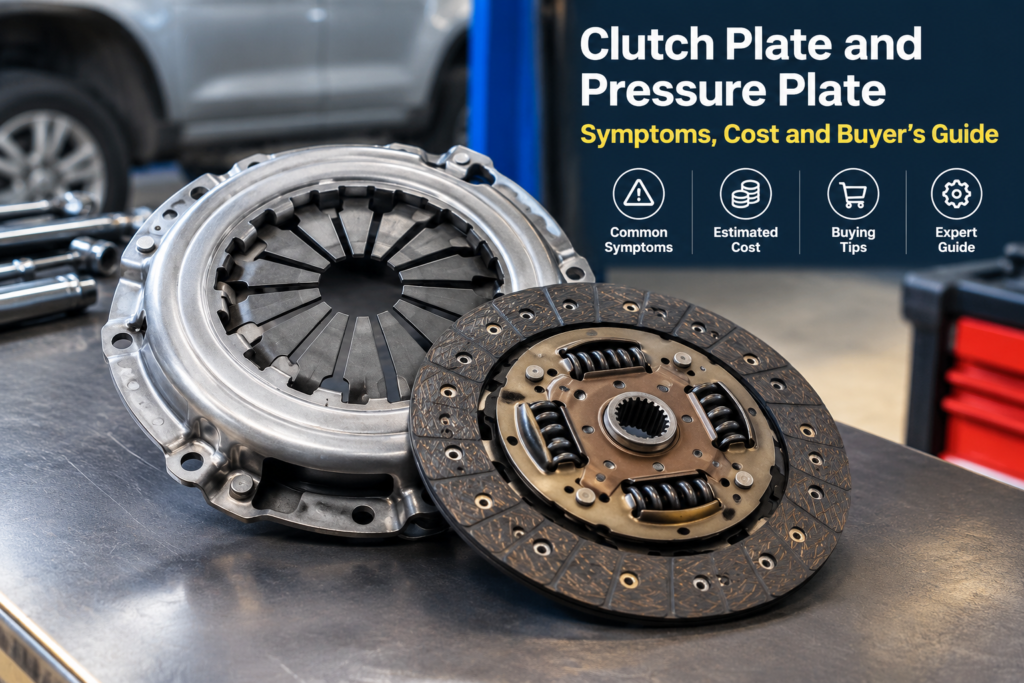
The clutch plate is a friction disc. It sits between the engine flywheel and the pressure plate. The pressure plate is a spring-loaded cover that bolts to the flywheel. It clamps the disc against the flywheel and holds it tight.
Together, the two parts link your engine to your wheels. You press the pedal, and the engine separates from the transmission. You release the pedal, and power flows to the wheels again.
Do you know which part wears out first? The clutch plate does. Its friction material thins with every shift. The pressure plate lasts longer, but it fails when its springs weaken or its surface overheats. South Bend Clutch explains that a weak pressure plate causes slip, shift problems and lower performance.
How Do the Clutch Plate and Pressure Plate Work Together?
The system has three stages. Each stage takes only a moment.
- Pedal up: The pressure plate presses the disc against the flywheel. Torque flows to the transmission.
- Pedal down: The throwout bearing pushes on the pressure plate fingers. The clamp force drops, and the disc spins free. You can now shift gears or stop without a stall.
- Pedal released: The springs reapply force. The disc speeds up to match the flywheel. You feel this smooth change as the “bite” of the clutch.
Spring strength sets the feel of the pedal. Low clamp force lets the clutch slip under load. High clamp force makes the pedal heavy and the engagement harsh. Which feel do you want from your car?
What Types of Pressure Plates Exist?
Two designs dominate the market. Each suits a different job.
Diaphragm pressure plates use one large conical spring. They need less pedal effort and engage smoothly. Most modern passenger cars use this design.
Borg and Beck pressure plates use several coil springs and release levers. They engage more gradually. Older vehicles and heavy-duty trucks often rely on them.
Heavy-duty and performance plates raise the clamp force. They handle more torque for tow rigs, race cars and tuned engines. The pedal feels stiffer in return.
Which Clutch Disc Matches Your Pressure Plate?
Your daily use decides the right pair. A mismatch causes poor performance and early wear. Study the table below.
| Disc type | Best use | Key trait |
| Organic | Daily commute | Smooth, quiet, forgiving |
| Kevlar blend | Spirited street use | Longer life than organic |
| Ceramic | Race and track | High grip, grabby in traffic |
| Heavy-duty | Tow and haul | Handles load and heat |
Would a race clutch suit your commute? Probably not. It grabs hard and tires your leg in traffic. A stock clutch behind a tuned engine slips just as fast. Match the kit to your real use.
What Other Clutch Systems Should You Know?
Passenger cars mostly use a single plate clutch. Motorcycles and performance cars use a multi plate clutch. It fits more torque into a small space and sheds heat well. Scooters and go-karts use a centrifugal clutch. It engages on its own as engine speed rises.
Hydraulic and cable systems describe the pedal link, not the clutch design. A hydraulic clutch uses fluid, a master cylinder and a slave cylinder. It gives a light, smooth pedal. A cable clutch uses a steel cable. It needs an occasional adjustment.
What Are the Signs of a Bad Clutch or Pressure Plate?
Early detection saves your flywheel and transmission. Does your clutch show any of these signs?
Common clutch symptoms
- A burnt smell on hills or in heavy traffic
- Engine revs that climb without a gain in speed
- Grind noises or hard shifts
- A spongy pedal or pedal vibration
- A high engagement point near the top of the pedal travel
Bad pressure plate symptoms
- A stiff pedal with no free play
- Shudder or chatter at pull-away
- Slip that continues after a new disc
- Uneven, unpredictable engagement
Pressure plates fail for four main reasons. Springs weaken with age. Heat damages the plate after a long slip. Overheat warps the friction face. A mismatched part wears out early.
Try one quick check first. The pedal may feel odd while the clutch still holds. In that case, inspect the hydraulic fluid level, look for leaks and check the cable adjustment. A failed master or slave cylinder mimics a worn clutch.
When Should You Replace the Clutch?
Most clutches last about 60,000 to 100,000 miles. Hard use cuts that number sharply. Riding the pedal, hard launches, heavy loads and stop-and-go traffic all shorten clutch life.
Plan a replacement when you see these signs:
- Slip that adjustment does not fix
- Hard shifts across several gears
- A burnt smell with a loss of power
- Grooves, glaze or lost friction material on the disc
- A warped, blued or cracked pressure plate face
- Chatter that never fades
Do you want to avoid a roadside breakdown? Act on the first clear symptom. A slipping clutch overheats the flywheel and raises the final bill.
How Much Does Pressure Plate Replacement Cost in the USA?
Prices vary by vehicle, brand and region. The ranges below are typical for the USA. Confirm each figure with your parts supplier and shop.
- Pressure plate alone: about $60 to $250 for common cars
- Complete clutch kit: about $150 to $500 for standard applications
- Flywheel resurface or replacement: low cost to resurface, several hundred dollars for a dual-mass unit
- Professional replacement: roughly $800 to $2,000 or more, depending on the vehicle
Labor makes up the largest share of the bill. The mechanic must remove the transmission to reach the clutch. Would you pay that labor twice? A plate-only repair often leads to a second job within months. Replace the full set once.
Why Is a Clutch Kit the Smarter Purchase?
You can buy a pressure plate alone. Mechanics still recommend a full kit. The parts wear together, and the labor stays the same.
A good kit includes four items:
- Clutch disc
- Pressure plate
- Throwout bearing
- Alignment tool
Inspect or replace these parts while the transmission is out:
- Pilot bearing: it supports the transmission input shaft
- Flywheel: resurface it, or replace it if it shows cracks or heat spots
- Hydraulic parts: the master cylinder and the slave cylinder
- Bolts and hardware: use new bolts where the maker requires them
- Rear main seal: an oil leak ruins a new disc fast
South Bend Clutch warns that a skipped component lets clutch failure return. Do you want a repeat repair? Then replace every worn part at once.
How Do You Choose the Right Pressure Plate?
Follow five steps. Each step protects your budget.
- Confirm your vehicle details. Note the year, make, model, engine, transmission and flywheel type. Use your VIN when possible.
- Define your use. Pick from commute, tow, track or a modified engine.
- Match the combination. Use an organic disc with a diaphragm plate for daily use. Pair a heavy-duty disc with a high-clamp plate for loads. Choose a high-torque kit for performance, and accept a firmer pedal.
- Check the release system. Your new parts must match a hydraulic or cable setup.
- Pick a trusted seller. Compare fitment guarantees, shipping time and warranty. Do not judge on price alone.
Where Can You Buy a Pressure Plate in the USA?
You have four common options:
- Parts Geek: OEM-quality parts from makers such as Sachs and LuK
- Advanced Clutch Technology (ACT): heavy-duty plates for higher torque and high RPM
- AutoZone: local pickup or fast delivery
- Walmart Automotive: budget and performance options from brands such as Action Clutch and McLeod
Which seller fits your timeline? Local stores win on speed. Online retailers often win on price and brand range.
How Do You Install a Clutch and Pressure Plate?
Treat this outline as a general guide. Your factory service manual lists exact steps and torque specs.
- Lift the vehicle on stands or a lift.
- Remove the transmission and any driveshaft or axle parts.
- Remove the old pressure plate and disc from the flywheel.
- Inspect the flywheel. Resurface or replace it as needed.
- Replace the pilot bearing. Clean every mating surface and keep oil off the friction faces.
- Place the new disc with an alignment tool. Face the correct side toward the flywheel.
- Tighten the pressure plate bolts evenly in a star pattern to the listed torque.
- Install the new throwout bearing and refit the transmission.
- Bleed the hydraulic system if your car has one. Test pedal feel and travel.
Clutch work carries safety risks. Hire a qualified mechanic if you lack the tools or experience.
How Can You Make a New Clutch Last Longer?
Small habits add thousands of miles. Follow these tips:
- Keep launches gentle for the first few hundred miles so the disc beds in.
- Keep your foot off the pedal between shifts.
- Hold the car on a hill with the brake, not clutch slip.
- Shift to neutral at long stops.
- Fix fluid leaks early.
What Are the Most Common Clutch Questions?
What is a pressure plate in a car?
The pressure plate is a spring-loaded assembly. It presses the clutch disc against the flywheel. Power then flows from the engine to the transmission.
What is the difference between a clutch plate and a pressure plate?
The clutch plate is the friction disc that wears out. The pressure plate is the spring-loaded clamp that holds the disc against the flywheel.
Can you replace only the pressure plate?
Yes, but it rarely makes sense. The disc and bearing wear alongside it, and the labor cost stays the same.
What causes a loss of clutch pressure?
Hydraulic systems lose pressure through leaks, air in the lines or a failed cylinder. Cable systems lose it through slack or poor adjustment. Tired pressure plate springs also cause slip.
How do you know the pressure plate is failing?
Look for slip after a new disc, a stiff pedal, shudder at engagement and a high engagement point.
How long does a clutch last?
Most last 60,000 to 100,000 miles or more. Vehicle weight, load and habits decide the real figure.
Is a performance clutch worth the money?
It pays off only for high-output engines and hard use. An OEM-style kit runs smoother and quieter for a normal commute.
What Should You Remember About Clutch and Pressure Plate Care?
The clutch plate and pressure plate form the core of a manual drivetrain. Learn the early symptoms and act fast. Replace the parts as a matched kit with the support parts. You gain smoother shifts, better reliability and fewer repeat repairs.
Match the parts to your use and confirm fitment before you buy. Ask a trusted mechanic when you feel unsure.
CarRevix is an automotive-focused platform offering car care information, maintenance guidance, repair insights, and automotive services. It also supports automotive brands through SEO, link building, sponsored content, reviews, and targeted advertising solutions, helping businesses improve visibility and reach car enthusiasts