
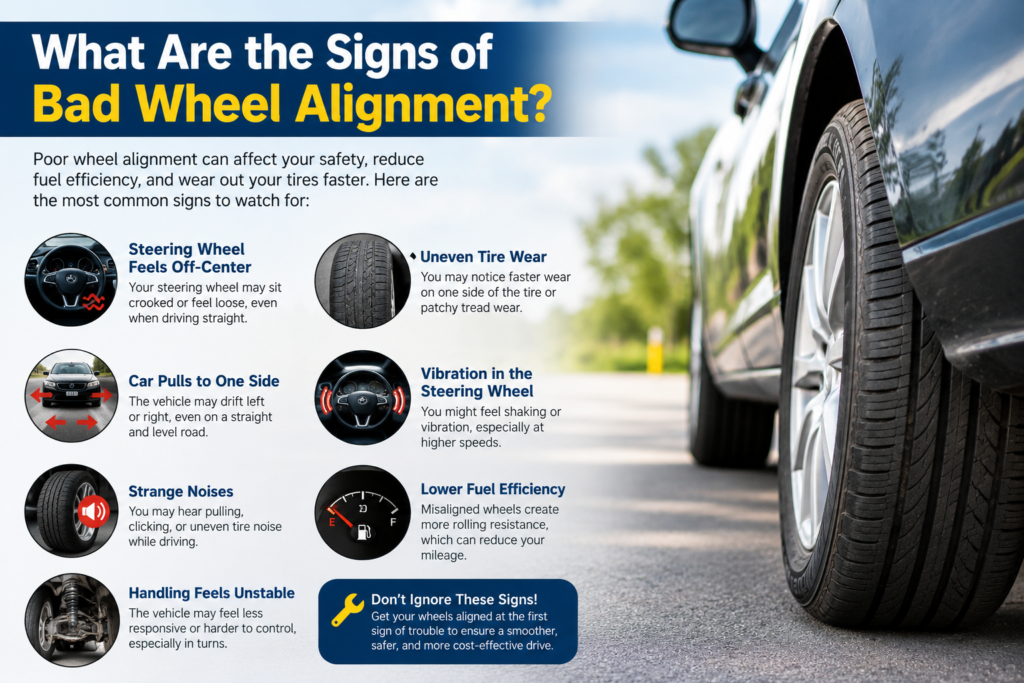
Bad wheel alignment steals tire life and control from your car. You often feel it before you see it. Your car drifts, your tires wear fast, and your wheel sits crooked. Which signs matter most? What causes them? What should you do next? The sections below answer each question.
What Is Wheel Alignment and Why Does It Matter?
Wheel alignment is a service that adjusts the angles of your tires. A technician matches those angles to the vehicle manufacturer’s specifications. Correct angles give your tires full contact with the road. Your car then responds better, and your tires last longer. Fuel efficiency also improves.
Do you know how often your manufacturer recommends an alignment? Check your owner’s manual. Book a check sooner if you notice any symptom below.
What Are the Most Common Signs of Bad Wheel Alignment?
Does Your Car Pull to One Side?
Your car drifts left or right on a straight, level road. You must correct the wheel again and again to hold your lane. The drift grows worse at highway speed and on wet pavement. Pull is therefore a real safety risk.
Is Your Steering Wheel Crooked?
Your steering wheel should point straight when the car travels straight. A crooked or off-center wheel signals trouble. The wheel may also fail to snap back to center after a turn. You then correct the car constantly. That effort tires you and pulls your eyes off the road.
Do Your Tires Wear Unevenly?
A misaligned car spreads weight unevenly across all four tires. Some tires wear faster than others. Look for two patterns:
- Camber wear: the extreme inner or outer edge of the tire wears down fast.
- Feathering: the tread shows a sharp sawtooth pattern.
Front and rear tires may also show different wear patterns. Uneven wear shortens tire life and raises your maintenance costs. It also weakens your control of the car. Worn tires suffer blowouts and punctures more easily.
Do Your Tires Squeal in Turns?
Misaligned tires scrub sideways across the pavement. You hear a screech even in normal, low-speed turns. The noise also signals extra stress on the tires. Faster wear follows. Wet roads make the car harder to control.
Does Your Car Feel Loose or Floaty?
The car feels vague, sloppy, or slow to respond. You make small corrections just to stay in your lane. Danger rises when you must dodge an obstacle fast. Rough roads add to the problem.
Does Your Steering Wheel Shake?
Misaligned tires push against each other unevenly. That conflict can shake the wheel, especially at highway speeds. Note one caveat, though. Unbalanced wheels cause high-speed vibration more often than alignment does. A technician can tell the two problems apart.
Which Symptom Points to Which Problem?
| Symptom | What it usually means |
| Car drifts to one side | Angles are out of specification |
| Crooked steering wheel | Alignment is off-center |
| Inner or outer edge wear | Camber wear |
| Sawtooth tread | Feathering |
| Squeal in low-speed turns | Tires scrub the pavement |
| Floaty feel | Worn parts or poor alignment |
| Shake at highway speed | Alignment or unbalanced wheels |
What Causes Wheel Misalignment?
Several events knock your wheels out of line:
- Deep potholes, hard curb strikes, and fast speed bumps
- Minor collisions and accidents
- Worn suspension and steering parts, such as ball joints and tie rods
- Changes to vehicle height, such as a lift or a lowered setup
- Recent suspension work
Did you hit a pothole or curb recently? Did a shop service your suspension? Either event can shift your angles. Poor driving habits add to the damage over time.
Is Bad Alignment Dangerous?
Yes, it is. Bad alignment affects your safety, your wallet, and your comfort.
- Safety: You lose control at speed and on wet roads. Worn tires raise your blowout risk.
- Cost: You replace tires more often. Your fuel efficiency also drops.
- Comfort: You work harder at every drive. Fatigue follows.
What Should You Do Next?
- Note your symptoms. Write down what you feel, hear, and see.
- Book an alignment check. Choose a certified technician or auto shop.
- Ask for a suspension inspection. Worn ball joints or tie rods can undo a fresh alignment.
- Follow your manufacturer’s schedule. Regular checks prevent future problems.
Act fast after a severe pothole, a curb strike, or suspension work. Early action protects your tires.
Frequently Asked Questions
How Do You Know If Your Alignment Is Bad?
Watch for a car that pulls, a crooked wheel, uneven tire wear, and tire squeal in turns. A floaty feel and a shaking wheel also count. One sign deserves a check. Several signs demand one.
What Makes an Alignment Go Bad?
Impacts cause most cases. Potholes, curbs, and minor collisions top the list. Worn suspension parts and height changes also shift your angles.
How Fast Do Tires Wear With Bad Alignment?
Speed depends on how far the angles drift from specification. Severe misalignment wears tires fast. Check your tread often once you spot a symptom.
Can Alignment Cause Vibration at High Speeds?
Yes, it can. Unbalanced wheels cause it more often, though. A technician will test both.
Is It Safe to Drive With Bad Alignment?
You can reach a shop safely in most cases. Do not delay the repair. Control, tire life, and fuel costs all suffer each day you wait.
What Is the Final Takeaway on Bad Wheel Alignment?
Bad alignment gives you clear warnings. Your car pulls, your steering wheel sits crooked, and your tires wear unevenly. Squeals in turns, a floaty feel, and a shaky wheel add to the list. Each sign tells you the same story. Your wheel angles no longer match factory specifications.
Why should you act now? Small problems grow fast. Uneven wear shortens tire life. Poor control raises your crash risk. Weak fuel efficiency drains your wallet. A quick alignment check costs far less than a new set of tires.
What is your next move? Book a check with a certified technician today. Ask for a suspension inspection too. Worn ball joints and tie rods can ruin a fresh alignment. Then follow your manufacturer’s schedule to keep your angles true.
CarRevix is an automotive information website that helps readers learn about car maintenance, repair costs, vehicle parts, warning lights, troubleshooting, and automotive buying guides. It provides practical information to help drivers understand common car problems, maintain their vehicles, and make informed repair and purchasing decisions.