
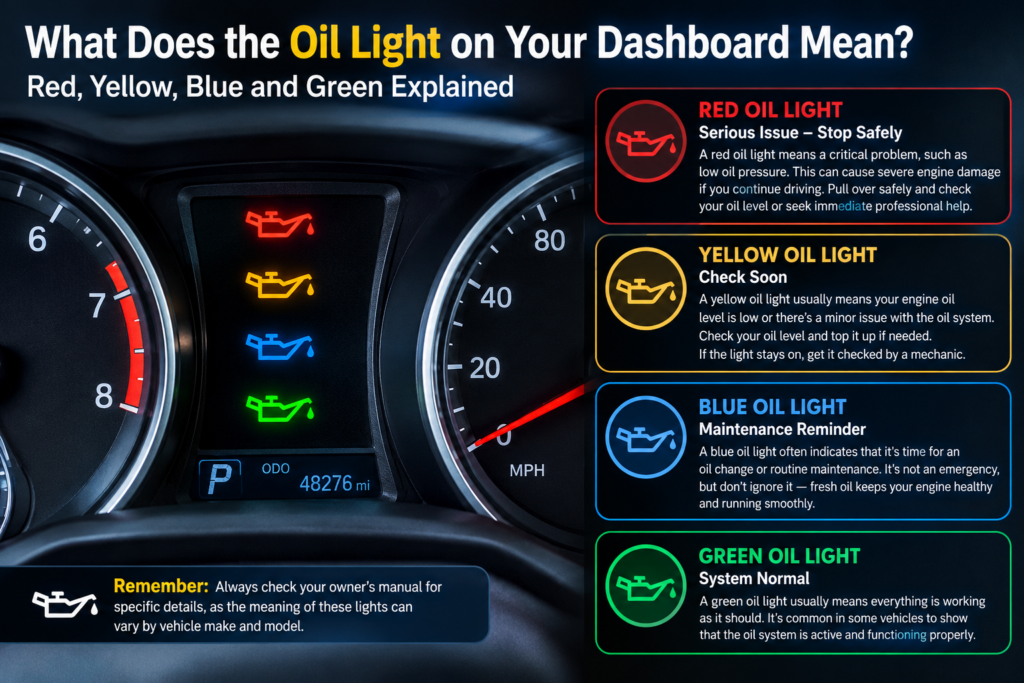
An oil light on your dashboard demands your attention. The icon looks like an old-fashioned oil can. It points to a problem with your engine oil, yet the urgency varies. Some alerts need a quick top-off. Others demand an immediate stop. How do you tell them apart?
You will find answers to the questions drivers ask most:
- What is the difference between a red and a yellow oil light?
- What does it mean if the red light blinks?
- When is the light a simple reminder, and when is it critical?
- Can you drive with the oil light on, and will you ruin your engine?
- What should you do first?
Treat every oil light as real. Your car may run fine, yet the light is often the first sign of engine risk. Airpark Auto Pros makes the same point in its dashboard guide.
What Does the Oil Light on Your Dashboard Mean?
The oil light reports on oil level, oil pressure, or your service schedule. Engine oil lubricates the internal parts of your engine. Low pressure leaves those parts dry. Metal then rubs against metal, and wear builds fast. Severe cases end in catastrophic engine failure.
Take 5 separates two alert types. The oil change light means your car is overdue for service. The oil pressure light means pressure has dropped to a level that can damage the engine. Both can trace back to a clogged filter, low oil, or a faulty sensor. Which one do you see? Color gives you the first clue.
What Is the Difference Between a Red and a Yellow Oil Light?
Red signals danger. Yellow signals caution. Driven Drum, published in September 2025, also lists blue and green lights on some models. The table below sums up each color.
| Light | Usual meaning | Urgency | First action |
| Steady red | Oil pressure below the safe range | High | Pull over and shut off the engine |
| Red that blinks | Severe fault, such as a failed oil pump or clogged oil pickup | Critical | Stop at once and call a tow truck |
| Yellow or amber | Low oil level or overdue oil change | Moderate | Check the dipstick and top off soon |
| Blue or green | Cold oil or an active system (some models) | Low | Let the engine warm up |
What Does a Yellow or Amber Oil Light Mean?
A yellow oil light usually points to a low oil level. Many modern cars carry electronic oil level sensors. Such sensors give you an early alert. Older cars stayed silent until oil pressure dropped. Driven Dru adds that yellow can also mean an oil change is overdue.
Check the oil level as soon as it is safe to stop. Top off the oil if needed. Then book a leak inspection with a trusted repair shop. Why the inspection? A healthy engine burns too little oil between changes to trigger the light. A yellow alert often points to a leak or oil burn.
Does your car lack a dipstick? Many models with oil level sensors skip it. The dash may show a message that tells you how much oil to add. Some cars also let you check the level through an onboard computer menu.
What Does a Steady Red Oil Light Mean?
A steady red oil light means oil pressure has fallen below the safe range. Several faults can cause the drop:
- Low oil level
- A faulty oil pump
- An internal oil leak
- Excessive wear on internal engine parts
Metal parts lose lubrication when pressure falls. Small repairs then turn into major ones. Pull over and shut off the engine once it is safe. Look under the car for serious leaks. Check the oil level and top it off if needed. Leave the car parked if you find a severe leak or if the light stays on. Tow it to a trusted shop for diagnosis.
What Does It Mean If the Red Oil Light Blinks?
A red light that blinks is more critical than a steady one. Airpark Auto Pros links it to severe faults, such as a failed oil pump or a clogged oil pickup. The engine can fail within a short time. Stop immediately and inspect the car. Skip the drive home.
What Do Blue and Green Oil Lights Mean?
Blue and green oil lights appear less often. Driven Dru says some modern cars use them to show cold oil or an active system. You need no urgent repair. Let the engine warm up before you push it to higher speeds. Your owner’s manual confirms the color meaning for your model.
Is It Normal for the Oil Light to Come On at Startup?
Yes, a brief flash is normal. Most cars run a quick system check when you turn the key. The engine also needs a second to build oil pressure. A light that goes out within a few seconds is most likely fine.
Does the light stay on longer than a few seconds? Does it come and go as you drive? Low oil is a common cause. The oil pickup tube can lose contact with the oil when it shifts side to side or front to back. That shift happens in turns, fast starts, and stops. Check the oil level and top it off. Then ask a shop to check for leaks or oil burn. A light that stays on at the proper oil level points to a deeper issue.
Can You Drive With the Oil Light On? Will You Blow Your Engine?
The answer depends on the color. A red light means stop. Greasepro and RAC both advise you to pull over right away. Even a short trip can cost you the engine.
A yellow light gives you more room. Stop soon, check the dipstick, and top off the oil. Take 5 says you can drive after an oil change light appears, but you should book service fast. A long delay can damage or stall the engine.
Listen to your engine as well. Ticks, rattles, or knocks signal low oil pressure. Take 5 advises that the car should leave the road in that state.
How long can you wait for an oil change? Take 5 gives these mileage ranges:
- Older vehicles: about every 3,000 miles
- Newer vehicles with modern lubricants: every 5,000 to 7,000 miles
Your owner’s manual gives the exact interval for your car.
What Should You Do Right Away When the Oil Light Comes On?
Follow these steps in order:
- Switch on your hazard lights and pull over to a flat, safe spot.
- Shut off the engine and let it cool for 10 to 15 minutes so the oil settles into the oil pan.
- Check the oil level with the dipstick.
- Add the manufacturer-recommended oil grade if the level sits at or below the add mark.
- Decide your next move. Drive carefully to a shop when the light goes out after you add oil. Call roadside assistance or a tow truck when the light stays on at a full oil level.
Why wait for the engine to cool? Hot parts can burn you. The wait also gives you a more accurate read.
How Do You Check Oil With a Dipstick?
A correct method gives you a true result. Follow these seven steps:
- Park on a flat surface and turn off the engine. The dipstick is calibrated for an engine at rest.
- Open the hood and find the dipstick. Many have a yellow loop. Your owner’s manual shows the spot. Engine parts get hot, so take care.
- Pull the dipstick straight out of the tube. Hold a rag near the tip to catch drips.
- Wipe the oil off. Oil can slosh up the stick and show a false level.
- Push the dipstick fully back into the tube.
- Pull it out again and read the level. The oil should sit between the minimum and maximum marks.
- Return the dipstick and seat it fully.
Avoid overfill. Oil above or below the safe range can harm the engine. Does your car have no dipstick? The onboard computer shows the level instead.
What Causes an Oil Light to Come On?
Causes vary by vehicle. Take 5 lists six common reasons, and Airpark Auto Pros adds more. These are the most common:
- Low oil level. Leaks or normal oil use drop the level, and pressure falls with it.
- Oil leaks. Common sources include a leaky filter, a bad gasket, a loose drain plug, and a damaged oil pan. Park the car on level ground for a few hours, then look for puddles underneath.
- Dirty or thin oil. Debris and metal particles disrupt pressure. Sludge and fuel dilution lower viscosity. Dark brown oil or metal particles on the dipstick signal dirty oil.
- Clogged oil filter. A saturated filter blocks oil flow.
- Worn oil pump or clogged oil passages. The pump circulates oil through the engine. A worn pump cannot push oil through narrow passages.
- Clogged oil pickup. A blocked pickup starves the pump of oil.
- Faulty oil pressure sensor or wires. The sensor reports pressure to the engine control module. A failed sensor can send false data.
- Internal engine wear. Worn crankshaft and rod parts drop oil pressure.
Why Is the Oil Light On When the Oil Is Full?
A full dipstick leaves some faults hidden. Some faults trigger the light even at a full oil level. A bad sensor, a worn pump, a clogged filter, blocked passages, or thin oil can each cause it. Airpark Auto Pros stresses that the dipstick alone cannot settle the matter.
A faulty sensor is the best case. Drivers often call it an affordable and common repair. Still, a shop must confirm it. A bad sensor may leave your oil pressure fine, yet the alert system must work when you need it.
Why Does the Oil Light Stay On After an Oil Change?
Start with the reset. Many cars need a manual reset after service. Methods differ by make and model. Some cars ask you to press the gas pedal several times. Newer models use wheel controls and on-screen steps. Your owner’s manual gives the exact procedure. Step-by-step videos for your model also help.
The light may stay on after a correct reset. Take 5 lists possible causes:
- A bad oil pump
- A sensor issue
- Low oil circulation
- Sludge in the engine
Act fast in this case. A professional can find the exact cause.
When Should You Call a Tow Truck?
Skip the drive and call for help in these cases:
- You see a severe oil leak under the car.
- The light stays on after you correct the oil level.
- The red light blinks.
- The oil level looks fine, but the red light stays on.
- You hear ticks, rattles, or knocks from the engine.
A tow costs far less than a new engine.
What Are the Most Common Questions About the Oil Light?
Is it safe to drive with the oil light on?
A red light means no. Pull over and shut off the engine once it is safe. Greasepro and RAC both advise you to stop right away. Even a short trip can cost you the engine.
A yellow light gives you more room. Stop soon, check the dipstick, and top off the oil. Which color do you see? Your answer sets your next move.
How long can you drive with the oil light on?
A red light allows no safe distance. Oil pressure has dropped, so metal parts lose lubrication. A red light that blinks is worse. Airpark Auto Pros says the engine can fail within a short time.
A yellow light lets you reach a safe spot to check the oil. Book service soon after that.
Can you drive with the oil change light on?
Yes, but you should prioritize the service. Take 5 says a long delay can damage or stall your engine. How often do you need an oil change? Older vehicles need one about every 3,000 miles. Newer vehicles with modern lubricants can go 5,000 to 7,000 miles. Your owner’s manual gives the exact interval.
What does a red oil light that blinks mean?
It signals a severe fault. Examples include a failed oil pump or a clogged oil pickup. Stop immediately and inspect the car. Call a tow truck if the light stays on.
Why is the oil light on when the oil is full?
A full dipstick leaves some faults hidden. A faulty sensor, a worn pump, a clogged filter, blocked oil passages, or thin oil can each trigger the light. Airpark Auto Pros stresses that the dipstick alone cannot settle the matter. A shop can confirm the cause.
Why does the oil light come on and off while you drive?
Low oil is a common reason. The oil shifts side to side or front to back in turns, fast starts, and stops. The pickup tube may then lose contact with the oil. Check the level and top it off. Then ask a shop to check for leaks or oil burn.
Is it normal for the oil light to flash at startup?
Yes. Most cars run a quick system check when you turn the key. The engine also needs a second to build oil pressure. The light should go out within a few seconds. Does it stay on longer? Check the oil level and see a shop.
Why does the oil light stay on after an oil change?
Start with the reset. Many cars need a manual reset after service. Methods differ by make and model, so follow your owner’s manual. The light may stay on after a correct reset. A bad oil pump, a sensor issue, low oil circulation, or sludge in the engine could be the cause. Consult a professional without delay.
What does a yellow oil light mean?
It usually means the oil level is low. Driven Dru adds that an overdue oil change can also trigger it. Check the dipstick and top off the oil. Then book a leak inspection, because a healthy engine burns too little oil between changes to trigger the light.
How do you fix an oil light?
The fix depends on the cause:
- Low oil: Add the manufacturer-recommended oil grade.
- Leak: Have a shop repair the filter, gasket, drain plug, or oil pan.
- Dirty oil or clogged filter: Schedule an oil change. A full-service change usually includes a new filter.
- Faulty sensor: Have a technician replace it.
- Worn oil pump: Have a shop diagnose and replace it.
Which cause fits your car? Check the dipstick first, then call a trusted shop if the light stays on.
How Can You Prevent Oil Light Problems?
Routine care keeps the light off. Follow the oil change interval in your owner’s manual. Check your oil level on a regular schedule. Fix small leaks early. Use the oil grade your manufacturer recommends. Replace the oil filter with each full-service oil change, as Take 5 notes.
CarRevix is an automotive information website that helps readers understand car maintenance, repair costs, dashboard warning lights, automotive parts, and troubleshooting. It provides practical guides and helpful tips to help drivers make informed decisions about vehicle maintenance, repairs, and safety.