
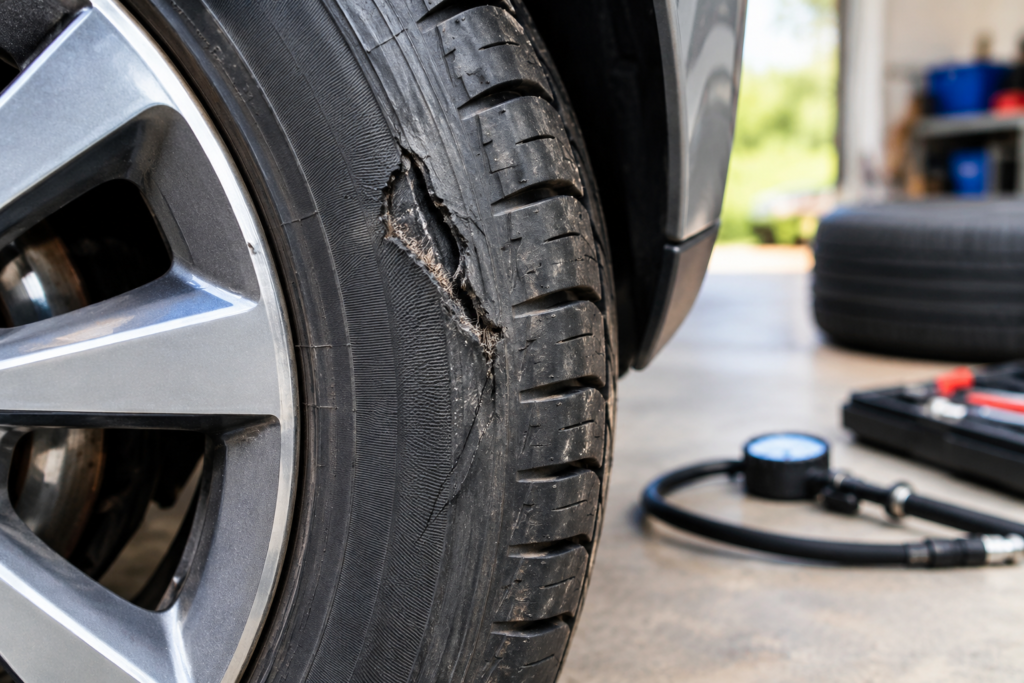
Meta description: Spot a bulge, cut, or crack on your tire sidewall? Learn the risks, the repair rules, the replacement cost, and the best ways to prevent damage.
You walk to your car and spot a bubble on the tire. Your stomach drops. Can a shop patch it? Can you drive home first?
Stop and read this guide. The short answer is simple. You cannot repair sidewall damage safely, so you must replace the tire. The sections below explain why, what it costs, and how you protect your next set.
What Is a Tire Sidewall?
The sidewall is the rubber wall between the tread and the rim. It links the tread to the bead, the edge that seals the tire onto the wheel. Layers of fabric and steel cords sit inside it. Those cords give the tire its strength.
The sidewall also carries your tire data. You will find the size, load index, speed rating, and DOT code there. It flexes over every bump and holds up the weight of your vehicle. However, it has far less rubber than the tread. That makes it the weakest part of the tire.
Is Tire Sidewall Damage Dangerous?
Yes. A damaged sidewall can fail without warning signs. The National Highway Traffic Safety Administration (NHTSA) links tire problems to about 11,000 crashes in the United States each year. Many of those crashes start with a weak spot that a driver ignored.
A blowout at highway speed is hard to control. Heat and flex make a small flaw grow with each mile. Would you bet your safety on “just a few more miles”? The odds are poor.
What Types of Sidewall Damage Should You Check For?
Each type of damage carries a different level of risk. Use the table to rank what you see.
| Damage Type | What You See | Risk Level | Action |
| Bulge or bubble | A lump or air pocket on the side | Severe | Stop. Install the spare or call a tow. |
| Deep cut or gouge | A slice or lost rubber, with cords in view | Severe | Stop. Replace the tire. |
| Puncture | A nail or sharp object stuck in the wall | Severe | Replace the tire. Skip the plug. |
| Deformation | An uneven shape or a sag | Severe | Replace the tire. |
| Cracks (dry rot) | Fine, web-like lines across the rubber | Moderate to severe | Replace soon. Replace at once if cracks run deep. |
| Surface scuff | Shallow marks from a curb | Low | Inspect it. Replace if the rubber is torn. |
Why does a bulge rank so high? The cords inside the tire hold the air pressure. A bulge means those cords have snapped. Air pressure now pushes against weak rubber alone.
How Much Sidewall Damage Is OK?
Only shallow cosmetic scuffs are OK. A scuff that leaves the rubber whole, shows no cords, and causes no air loss usually stays safe. Any bulge needs replacement. Any cut that reaches the fabric layer needs replacement. Any deep crack needs replacement.
Ask a technician to check any mark you doubt. Many tire shops inspect a tire at no charge.
Can You Repair Tire Sidewall Damage?
No. Repair standards for cars, SUVs, and light trucks limit repairs to the tread area. The Tire Industry Association (TIA) and the U.S. Tire Manufacturers Association (USTMA) back this rule. Reputable shops refuse to patch a sidewall.
Physics explains the rule. The sidewall bends with every turn of the wheel. A patch or plug cannot hold under that stress. Heat builds, the repair loosens, and the tire can burst.
Do sealants solve the problem? No. A sealant may slow a slow leak. It cannot restore broken cords.
One exception exists. Certified industrial technicians can repair some large commercial, farm, and off-road tires. Cars, SUVs, and pickups fall outside that exception.
What Should You Do After You Spot Sidewall Damage?
Act fast and stay calm. Follow these steps.
- Slow down and exit safely. Signal early. Find a flat spot away from traffic.
- Turn on your hazard lights. Other drivers need to see you.
- Inspect the tire. Look for bulges, cuts, exposed cords, or air loss.
- Install your spare if the damage is severe. A compact spare usually limits you to about 50 mph. Read the label on your spare for its exact limits.
- Call roadside assistance if you feel unsure. A tow costs far less than a crash.
- Replace the tire. Book a shop visit the same day.
What If You Drive on a Flat Tire?
Tell the technician. A tire that runs flat, even for a short distance, can crush its inner sidewall. The damage hides on the inside, and the outside may look fine. A shop must remove the tire from the rim to check it.
Do not trust a tire that ran flat. Replace it when the shop finds any inner damage.
What Happens If You Hit a Curb or Pothole?
A hard hit pinches the tire between the rim and the road. Cords can snap with no cut in sight. A bulge may appear minutes, days, or weeks later.
Check the tire after any hard hit. Also check the rim and the alignment. A bent rim, a pull to one side, or a shake in the wheel signals more damage. Did you feel a hard jolt on your last drive? Look at that tire today.
What Causes Sidewall Damage?
Most damage comes from a short list of causes.
- Potholes and curbs. A hard hit pinches the sidewall against the rim.
- Low tire pressure. An underinflated sidewall flexes too far and builds heat. Pressure drops about 1 psi for every 10°F fall in air temperature, so a cold night can push a healthy tire below its safe level.
- Overload. Extra weight strains the tire beyond its load rating.
- Road debris. Glass, metal, and sharp rocks slice thin rubber with ease.
- Age and UV exposure. Sun and weather dry out the rubber and create cracks.
- Manufacturing defects. A bubble that appears with no impact may signal a defect.
- Chemical contact. Oil, fuel, and harsh cleaners break down rubber.
What Are the Early Signs of Sidewall Failure?
Your tires often send a signal before they fail. Watch for these signs:
- A bulge or bubble on the side
- A visible crack or cut
- A new vibration or shake in the wheel
- A tire that looks uneven or sags
- Air pressure that drops each week
- A dashboard pressure alert
Your car may help you here. Federal Motor Vehicle Safety Standard (FMVSS) No. 138 requires a tire pressure sensor system (TPMS) on every new passenger vehicle since the 2008 model year. The system alerts you when pressure falls about 25% below the recommended level. Do you wait for that light? Check your tires by hand before it comes on.
How Much Does a Replacement Tire Cost in the USA?
Prices vary by brand, size, and vehicle. Use these ranges as a rough budget.
| Cost Item | Typical U.S. Range |
| Budget passenger tire | 80–150 |
| Mid-range tire | 130–250 |
| Premium, SUV, or truck tire | 200–450+ |
| Install and balance | 15–45 per tire |
| Roadside tow | 75–150 or more |
A tread puncture repair costs far less, often $10 to $40. However, a sidewall puncture cannot use that fix. Prices change often, so check with local shops.
Should you replace one tire or two? Check tread depth first. A new tire beside a worn one changes how the car handles. Many shops advise a pair on the same axle. All-wheel-drive vehicles often have tighter limits, so read your owner’s manual.
Does a Warranty or Insurance Policy Cover Sidewall Damage?
It depends on the cause.
- Manufacturer warranty. It covers defects in material or work. A bubble with no sign of impact may qualify.
- Road hazard warranty. Many retailers sell it at purchase. It can cover potholes and debris.
- Auto insurance. Collision coverage may pay after you meet your deductible. One tire often costs less than the deductible.
- City or state claims. Some local governments accept pothole claims. Success rates vary.
Keep your receipt. Take photos of the damage. Both steps make every claim easier.
What Is the 3% Rule for Tire Size?
Keep the diameter of your new tire within about 3% of the original. A larger gap skews your speedometer and odometer. It can also affect ABS, traction control, and wheel clearance.
Match the load index and speed rating on your door placard. Ask the shop to confirm any size you doubt.
How Old Is Too Old for a Tire?
Find the DOT date code on the sidewall. The last four digits show the week and the year. The code “2324” means week 23 of 2024.
Many car and tire makers advise replacement at about six years. Most set ten years as the hard limit, even when the tread looks fine. Rubber ages from the inside out. Deep cracks on an older tire call for replacement at once.
How Can You Prevent Tire Sidewall Damage?
Small habits protect your tires. Which ones do you skip?
- Check pressure monthly. Use the number on the door jamb placard. The sidewall number shows maximum pressure only.
- Slow down early. Steer around holes and curbs when it is safe.
- Respect load limits. Add up passengers and cargo before a road trip.
- Inspect each tire monthly. Look for bubbles, cuts, and cracks. Run your hand over the sidewall to feel for lumps.
- Test your tread depth. Place a penny head-down in a groove. If you see all of Lincoln’s head, the tread sits below 2/32 inch. Replace the tire.
- Rotate your tires. Follow the schedule in your owner’s manual.
- Park in shade. Shade cuts UV damage. Wipe off oil and fuel spills.
How Does Your Climate Affect Tire Sidewalls?
Where you live changes your risk. Does your region appear below?
| Climate | Main Risk | Best Action |
| Hot and dry (Arizona, Nevada, Texas) | UV damage and heat stress | Check pressure more often. Park in shade. |
| Cold and snowy (Midwest, Northeast) | Stiff rubber, hidden cuts, road salt | Check pressure after cold snaps. Rinse off salt. |
| Coastal (Florida, California coast) | Salt air and damp speed up rubber wear | Wash tires often. Inspect them often. |
| Rough or gravel roads | Cuts and scrapes | Drive slower. Inspect after each trip. |
Should You Choose Reinforced or Run-Flat Tires?
Some tires add extra sidewall protection. Aramid fibers, the same family of fibers used in protective vests, help tires resist cuts and punctures. Nokian Tyres and other brands use them in light truck and SUV models. Run-flat tires let you drive about 50 miles at a limited speed after pressure loss.
Do these tires stop damage entirely? No. A damaged run-flat sidewall needs replacement, and most makers advise against repair. Choose reinforced tires if your roads are rough or full of debris.
What Is the Fastest Way to Buy a Replacement Tire?
Order online. Online retailers let you match your size, compare prices, and book an install at a partner shop. You skip the drive from store to store. You also pick your tire before an emergency forces a rushed choice.
FAQs:
Is a small sidewall scratch dangerous?
Usually no. A shallow scuff that leaves the rubber whole is cosmetic. Ask a technician to check any scratch that worries you.
Can I drive on a tire with a sidewall bulge?
No. The tire can burst at any moment. Install the spare or call a tow.
Can I plug a sidewall puncture?
No. Plugs and patches cannot handle sidewall flex.
How long can I drive on a cracked sidewall?
It depends on crack depth and tire age. Deep cracks need replacement at once. Fine surface cracks on an older tire signal that replacement is close.
Does a warranty cover sidewall damage?
It covers defects. Road damage rarely qualifies unless you bought road hazard coverage.
What is the top cause of sidewall damage?
Impact from potholes and curbs ranks high. Low tire pressure follows close behind.
Final Thought:
Sidewall damage is serious. The sidewall holds the cords that keep the tire strong and the air sealed in. Once those cords break, no patch, plug, or sealant restores them. The TIA and USTMA agree on this point. Replacement is the only safe fix.
Time matters here. NHTSA links tire problems to about 11,000 crashes each year in the United States. A bulge, a deep cut, or a deep crack can turn into a blowout on your next trip. Will you take that risk for a few miles? A new tire costs far less than a tow, a bent rim, or a crash.
Start with a quick plan today. Walk around your car and look at each sidewall. Run your hand over the rubber and feel for lumps. Compare the pressure to the number on your door placard. Read the DOT date code on each tire. Those four checks take less than ten minutes.
Then act on what you find. Replace any tire with a bulge, a deep cut, or exposed cords. Replace any tire that is nearly ten years old. Ask a technician to inspect any mark you doubt. Many shops offer free inspections.
CarRevix is an automotive-focused website that publishes informative articles about car maintenance, engine problems, repairs, replacement parts, warning lights, and vehicle troubleshooting. It also offers automotive guest posting, link insertion, SEO link building, sponsored content, and digital marketing services to help automotive businesses improve their online visibility.