
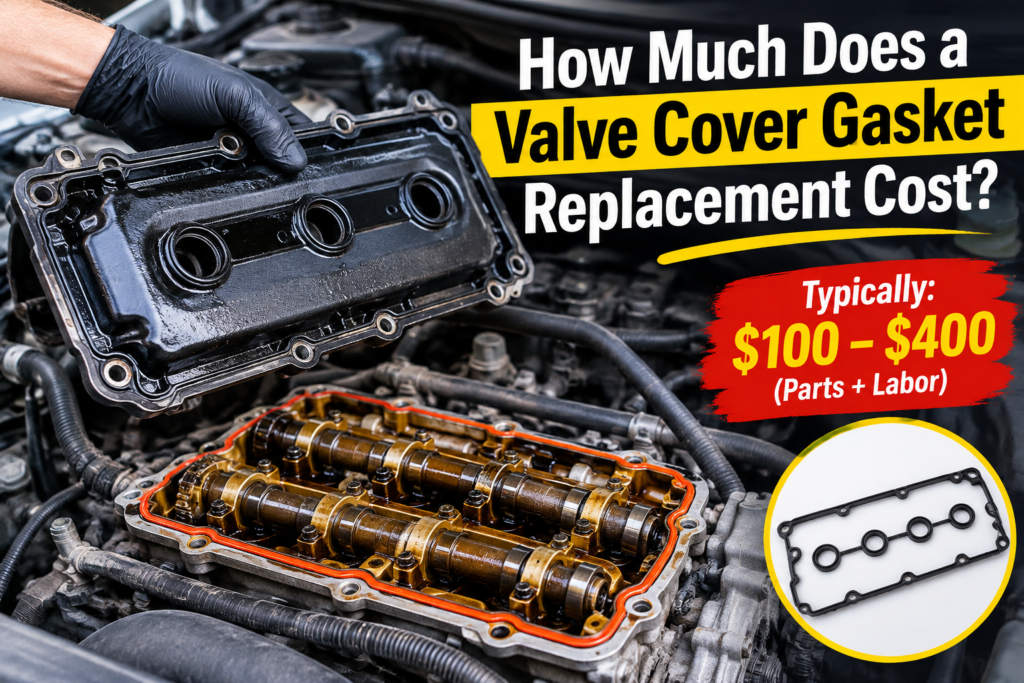
Meta description: Valve cover gasket replacement costs $100 to $500 for most cars. Compare prices by engine, spot symptoms early, and cut your repair bill.Your car leaks oil from the top of the engine, and your mechanic names the valve cover gasket. What will you pay? Most U.S. drivers pay $100 to $500. V6 and V8 owners often pay $400 to $1,000 or more. Luxury cars can reach $3,000. The part costs only $10 to $65, so labor drives the rest of the bill.
What Is a Valve Cover Gasket and Why Does It Fail?
The valve cover sits on top of the cylinder head and protects the valve train from dirt. The gasket forms a seal between the cover and the head. It holds oil inside and keeps unmetered air out.
Rubber and cork harden with age. Heat shrinks them and splits them. Oil then seeps out, and air leaks in. Have you spotted oil stains near the top of your engine? A worn gasket is the likely cause.
How Much Does a Valve Cover Gasket Replacement Cost?
Pulscar, J.D. Power, and Car Talk place the average between $100 and $500. Two items make up the total.
- Parts: A gasket or gasket set costs $10 to $65. A cracked or warped valve cover adds $25 to $200 or more.
- Labor: Shops charge $100 to $500, based on hourly rates of $100 to $200.
Why does labor cost so much? A mechanic removes parts to reach the cover. The mechanic then scrapes old gasket material from both surfaces. A simple job takes about one hour. A hard job on a luxury car can take eight hours or more.
How Much Does It Cost by Engine Type?
Engine layout changes the price more than any other factor. Find your range in the table.
| Engine or Vehicle Type | Typical Total Cost | Reason for the Price |
| Inline 4-cylinder | $100 – $300 | One cover sits on top and is easy to reach. |
| Standard mainstream vehicle | $300 – $500 | Access and labor time are moderate. |
| V6 or V8 | $400 – $1,000+ | Two covers. The rear cover hides under the intake manifold. |
| Luxury, exotic, or heavy-duty | $1,000 – $3,000+ | Complex layouts, dealership labor rates, and special tools. |
| DIY (parts only) | $30 – $120 | You supply the labor. |
Why Do V6 and V8 Engines Cost More?
V-shaped engines carry two valve covers. The rear cover sits under the intake manifold. A mechanic must remove the intake first. You then pay for a new intake manifold gasket, which costs $25 to $180. Labor time grows, and the bill grows with it.
Which Hidden Costs Can Raise Your Bill?
Do you expect to pay for the gasket alone? Ask your mechanic about three add-ons first.
Spark plug tube seals. Oil can seep into the spark plug wells. It then ruins the plugs and the ignition coils. New seals, plugs, and coils add $200 to $500 or more. A standard repair can climb to $700.
Full gasket kits. A kit includes perimeter gaskets, tube seals, and bolt grommets. AutoZone sells kits for most models. A kit costs a little more than a bare gasket but prevents repeat leaks.
Shop type. Dealerships often charge $150 per hour or more. Independent shops usually charge less. City shops charge more than rural shops.
What Are the Symptoms of a Bad Valve Cover Gasket?
Early repair saves money. Look for these signs:
- Oil on the valve cover or the side of the engine
- A smell of hot oil from drips on the exhaust
- Light smoke from the engine bay
- A rough or unstable idle from a vacuum leak
- A check engine light
- A failed emissions test
- Oil on the spark plugs or oxygen sensors
Is a small leak really urgent? Yes. Oil spreads to sensors and plugs, and air leaks upset the fuel mixture. Small problems grow into large repair bills.
Is It Safe to Drive With a Leaky Valve Cover Gasket?
You can drive short distances if you keep the oil level full. Check the dipstick often. Stop at once if smoke appears or the engine makes odd noises. Oil on a hot exhaust can start a fire. Book the repair soon.
Should You Replace the Gasket Yourself?
A DIY job cuts the cost to $30 to $120. Do you have the skills and the tools? Your engine decides the answer.
Easy jobs: An inline 4-cylinder with clear access takes two to four hours. Basic hand tools and a torque wrench are enough.
Hard jobs: A V6 or V8 can take eight hours or more. You must remove the intake and other parts. One small error can cause a new leak.
Follow these rules if you try it:
- Remove all old gasket material from both surfaces.
- Use sealant only where the maker calls for it.
- Tighten bolts to spec and in the right order.
- Buy a full kit instead of a bare gasket.
Hire a professional if you lack tools or experience. A failed DIY job costs more than a shop fee.
Do Cheap Alternatives Work?
Many drivers look for shortcuts. Most fail.
- Stop-leak additives swell seals for a short time. They can clog other engine parts.
- Cheap aftermarket gaskets often leak again. Choose an OEM or a trusted brand.
- A weekly oil top-off delays the repair, but dirt and contamination enter the engine.
- A sale of the car makes sense only if the quote exceeds its value.
How Can You Get a Fair Quote?
Follow five steps to avoid overpaying.
- Get written quotes from two or three shops.
- Ask for a parts and labor split.
- Confirm the quote covers tube seals and a full gasket kit.
- Compare the shop’s hourly rate with local rates.
- Check parts prices for your model on AutoZone.
Can you negotiate? Independent shops often have room to adjust. Expect small discounts on labor-heavy jobs.
How Can You Prevent Future Valve Cover Gasket Leaks?
No method stops gasket aging. You can slow it, though. Change your oil on schedule. Clean oil prevents sludge, and sludge harms seals. Use quality oil and filters. Replace a clogged PCV valve early, since extra crankcase pressure pushes oil past seals.
FAQ:
How Long Does the Job Take?
A simple 4-cylinder takes one to three hours. V6 and V8 engines take four to eight hours. Luxury models can take longer.
Is the Repair Urgent?
Yes. Oil contamination and vacuum leaks worsen over time. Fix the leak within weeks, not months.
Why Do Quotes Differ So Much?
Shop rates, engine layout, and add-on parts change the price. Ask each shop what the quote includes.
Does Insurance Cover It?
Standard auto insurance excludes wear. An extended warranty may cover it. Check your policy.
Final Thought:
A valve cover gasket costs little, but the repair takes skill and time. Most drivers pay $100 to $500. V6 and V8 owners pay $400 to $1,000 or more. Luxury owners can pay up to $3,000. Labor makes up most of that total.
Will the leak fix itself? No. Oil spreads to the spark plugs, the ignition coils, and the sensors. A $300 repair can grow into a $700 repair. Early action protects your engine and your wallet.
What should you do next? Check your engine for oil stains today. Request two written quotes. Ask each shop to split parts and labor. Choose a full gasket kit with tube seals. Do the job yourself only if you own an easy 4-cylinder and have the right tools.
Which choice saves you the most money? The fast one. Book the repair this month, and you keep the bill small. Your engine will run smooth, your oil will stay clean, and you will drive with confidence.
CarRevix is an automotive information platform that helps drivers understand car maintenance, repairs, common vehicle problems, and replacement costs. It publishes practical, easy-to-follow guides covering engine issues, brakes, transmission, tires, sensors, and other essential automotive topics. Its goal is to help car owners make informed repair decisions, understand maintenance costs, and keep their vehicles safe, reliable, and running smoothly.