
Meta description: Hear a whine when you turn? Learn nine power steering pump symptoms, simple tests, US repair costs, and when to replace the pump.
Your steering wheel feels heavy. A whine fills the cabin when you turn. What does it mean? A bad pump is the first suspect for most drivers. However, other faults copy the same signs, so you need a clear plan before you spend money.
What Does a Power Steering Pump Do?
The pump creates hydraulic pressure. It pulls fluid from the reservoir and pressurizes it. The fluid then travels through the pressure hose to the steering gear. The gear uses that pressure to help you turn the wheel. A return hose sends the fluid back, and the cycle repeats while the engine runs.
Strong pressure gives you light steering. Weak pressure makes the wheel heavy, especially at low speed. Does your car even have this system? Many newer vehicles use electric power steering and have no pump. Check your owner’s manual first.
What Are the Signs That the Power Steering Pump Is Bad?
Most pumps last 100,000 miles or more, so any new symptom deserves attention. Nine signs point to trouble.
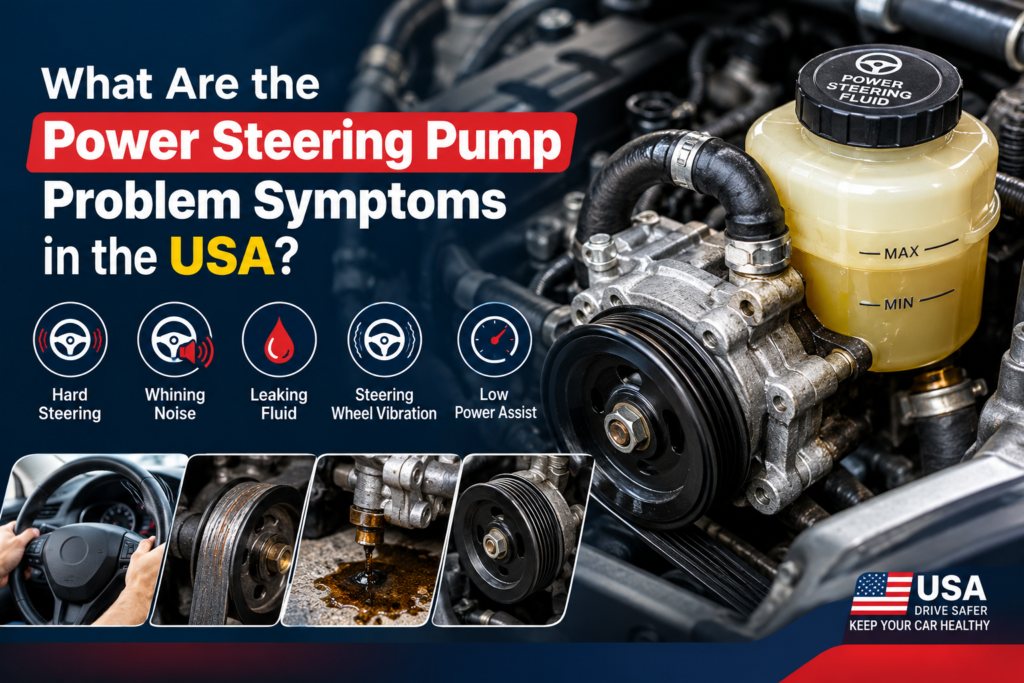
- Whine or groan when you turn. A high whine or a low groan is the classic warning. The noise grows louder at low speed, such as when you park.
- Noise that rises with engine speed. Press the gas pedal. If the whine climbs with the RPM, internal wear is likely.
- Squeal at startup. A sharp squeal often points to a loose or worn serpentine belt. The pump pulley can cause it too.
- Heavy or stiff steering. A weak pump cannot build enough pressure. You need real effort to turn in a tight spot.
- Power assist that comes and goes. The wheel feels normal, then heavy, then normal again. Unstable pressure causes that pattern.
- Fluid leaks. Power steering fluid is usually red, pink, or light brown. Look for puddles near the front of the engine bay. Leaks start at the pump shaft, the housing, the reservoir connection, or a hose.
- Foamy fluid. Open the reservoir. Bubbles or foam mean air is in the system. A bad seal or a cracked hose lets it in.
- Burnt smell or hot fluid. Low fluid forces the pump to work harder. Heat builds fast, and the fluid can smell burnt.
- Metal flakes in the fluid. Shiny silver or grey specks mean metal parts grind inside the pump.
You may also feel a pulse or vibration in the wheel. Uneven pressure creates that feel.
What Does the Color of Your Fluid Tell You?
Fluid is the quickest clue you have. Compare yours with the table below.
| Fluid look | What it means |
| Clean red, pink, or light brown | Normal fluid |
| Dark brown or black | Old or overheated fluid; plan a flush |
| Foamy or bubbly | Air in the system |
| Silver or grey specks | Internal metal wear |
| Level below the mark | Leak somewhere in the system |
Does a Whine Always Mean the Pump Is Bad?
No. Low fluid, trapped air, the wrong fluid, a clogged hose, or a slipping belt create the same whine. Many drivers replace a pump that works fine. That mistake costs real money, because a full repair runs about $500 to $1,500 or more in North America. Why pay for a part you do not need?
What Is the Most Common Power Steering Problem?
Low fluid from a leak tops the list. It causes noise and heavy steering. It also damages the pump, because a dry pump wears out fast. Hose leaks, pump seal leaks, and steering gear leaks all drain the system. Where does your fluid go? Find the leak first.
The cost gap is large. A bottle of fluid costs $20 to $80. A pump that runs dry can push your bill to $1,500 or more.
How Do You Test a Power Steering Pump Step by Step?
Follow the order below. Each step rules out a cheaper problem first.
- Check the fluid level and type. Park on level ground. Read the marks on the reservoir. Use the fluid your owner’s manual lists. Low fluid means a leak.
- Inspect for leaks. Look at the hoses, reservoir, fittings, and steering gear. Those parts may stay dry while fluid seeps from the pump shaft or housing. In that case, the pump is the likely source.
- Inspect the belt and tensioner. A loose, oily, or glazed belt cannot spin the pump at full speed. Check the tensioner and idler pulley too.
- Look for air. Foam means air is in the system. Bleed the system before you blame the pump.
- Check the hoses for restriction. A kinked or collapsed hose cuts flow. The symptoms copy a weak pump.
- Evaluate the steering gear. Heavy steering in one direction points to the gear, not the pump.
- Measure pressure and flow. A technician connects a gauge to the pump. Low readings after steps 1 to 6 point to internal pump wear.
Your factory service manual lists the exact pressure spec for your model. Ask the shop to compare the reading with it.
How Can You Tell the Pump From Other Steering Problems?
| What you notice | Most likely cause |
| Whine plus low fluid | Leak or air in the system |
| Whine, correct fluid, low pressure | Power steering pump |
| Heavy steering in one direction | Steering gear |
| Fluid at the pump shaft | Pump seal or pump failure |
| Fluid around the steering gear boots | Steering gear seal |
| Belt squeal when you turn | Belt, tensioner, or pump load |
| Loose play in the wheel | Tie rods or steering gear |
| Clunk over bumps | Suspension part |
| Heavy steering, normal pressure | Steering gear or mechanical drag |
What Causes a Power Steering Pump to Fail?
Seven causes lead the list.
- Low fluid. Less fluid means less lubrication and faster wear.
- Air in the system. Air adds noise and internal stress.
- Hydraulic leaks. Hoses, seals, and connections lose fluid over time.
- Belt or tensioner faults. A slipping belt cuts pump output.
- Internal wear. Pressure and flow drop as parts wear down.
- Worn shaft or internal parts. Expect noise, shaft play, leaks, or a pump that sticks.
- Dirty fluid. Metal debris damages the pump and other parts.
Heat also shortens pump life. A wheel held at full lock spikes pressure and heat. Release it as soon as you reach the stop.
How Long Does a Power Steering Pump Last?
No fixed replacement interval exists. Most pumps last 100,000 to 150,000 miles or more. That equals roughly 160,000 to 240,000 km. A well-kept pump can outlast the car.
Several factors shape that number. Fluid quality, hose condition, belt health, and climate all matter. Hot regions and heavy loads shorten pump life. Clean fluid at the right level extends it.
What Are the Symptoms of a Bad Power Steering Pump Pulley?
A worn or loose pulley spins the pump unevenly. You may hear a squeal or a rattle. The belt may wear fast or slip off. Steering may feel heavy because the pump cannot reach full speed.
Turn the engine off and look at the pulley. Does it wobble? Does it sit out of line with the belt? Either sign calls for a closer look from a technician.
Can You Drive a Car With a Bad Power Steering Pump?
You can, but you should not. The car stays steerable. However, effort jumps at low speed. A sudden loss of assist makes tight turns and emergency moves much harder.
A leak raises the risk. A dry pump destroys itself fast. It also sends metal debris through the system. That debris wears out the steering gear, and that repair usually costs more than a pump.
Check the reservoir first. If it is low, add the correct fluid and find the leak soon. If you lose assist on the road, pull over safely and call for a tow.
Can You Fix a Bad Power Steering Pump Without Replacing It?
Sometimes. Add the correct fluid. Bleed the air. Replace a worn belt or a weak tensioner. Replace a leaking hose. Each fix costs less than a new pump.
Internal wear has no cheap repair. A reseal kit can fix a shaft seal leak on some pumps. Even so, a worn pump may fail again soon.
When Should You Replace the Power Steering Pump?
Replace the pump when you confirm any of these facts:
- Pressure or flow falls below spec.
- The shaft or internal parts show excess play.
- The housing is cracked or damaged.
- The shaft seal leaks heavily.
- The pump seizes or sticks.
- Assist stays poor after you fix air, fluid, belt, hose, and steering gear issues.
Do not replace the pump first if you only have low fluid, air, the wrong fluid, a bad hose, or a weak tensioner. Fix those problems, then retest.
What Related Parts Should You Check During Replacement?
| Part | What to do |
| Power steering fluid | Refill with the correct specification |
| Pump O-rings and seals | Replace when you open the connections |
| Pressure hose | Replace if it leaks or restricts flow |
| Return hose | Inspect |
| Reservoir | Check for dirt or blockage |
| Drive belt | Inspect |
| Tensioner and idler | Inspect |
| Steering gear | Check for leaks or drag |
Did the old pump shed metal? Flush the whole system. A new pump in dirty fluid will fail again.
Bleed the system after you install the new pump. Trapped air makes a brand-new pump whine and foam. Many people think the new part is defective when air is the real issue.
How Much Does Power Steering Pump Replacement Cost in the USA?
Typical North American ranges look like this:
| Item | Typical cost |
| Power steering pump | 200–700 |
| Power steering fluid | 20–80 |
| Hoses and seals, if needed | 50–300+ |
| Labor | 250–800 |
| Flush and bleed | 50–200 |
| Complete repair | 500–1,500+ |
Your final bill depends on the vehicle, access, and any extra damage. Ask the shop for a written quote that lists each item. Does the quote include fluid, flush, and bleed? Confirm it before you approve the work.
Which Pump Fits a 2011–2013 Jeep Grand Cherokee WK2 or Dodge Durango?
Owners of these 3.6L V6 models often search for OE part number 52124998AJ. Sellers list it as a direct OE replacement for the 2011–2013 Jeep Grand Cherokee WK2 and the 2011–2013 Dodge Durango. The same symptoms and the same test order apply to both.
Confirm the fit before you order. Match your VIN, engine, steering setup, and OE number. Then follow the factory service manual for the exact procedure.
How Can You Make a Power Steering Pump Last Longer?
- Check the fluid level every month.
- Use only the fluid your manual lists.
- Fix small leaks early.
- Replace worn belts and weak tensioners.
- Release the wheel when it reaches full lock.
- Flush fluid that looks dark or dirty.
FAQs:
Does a noisy pump always need replacement?
No. Air, low fluid, the wrong fluid, a clogged hose, or a belt fault can cause the same noise.
Can a bad pump damage the steering gear?
Yes. Metal debris and poor fluid travel through the system and speed up wear.
Can I still drive if the pump whines?
Check the fluid first. If it is low, find the leak soon. A dry pump fails quickly.
Why does my new pump still whine?
Trapped air is the usual reason. Bleed the system again.
Does an electric power steering car have a pump?
No. Electric systems use a motor instead of hydraulic fluid.
Final Thoughts:
A bad power steering pump gives clear warnings. You hear a whine. You feel a heavy wheel. You spot red or brown fluid under the engine. Each sign tells you to act early.
Fluid comes first. Low fluid causes most of the noise and heavy steering, and it can destroy a pump. A $20 to $80 bottle of the correct fluid costs far less than a repair that runs $500 to $1,500 or more. Check the reservoir today.
Next, rule out the belt, the hoses, trapped air, and the steering gear. Most pumps last 100,000 to 150,000 miles, so a healthy one should not fail early. Replace yours only when a pressure test shows low output. Shaft play, a cracked housing, or a heavy seal leak also justify the swap.
After the repair, flush dirty fluid and bleed the system. Those two steps protect your new pump and your steering gear.
CarRevix is an automotive-focused website that provides helpful information about car maintenance, repair costs, troubleshooting, automotive parts, and vehicle care. It helps readers understand common car problems, identify possible causes, explore practical solutions, and make informed decisions about maintaining their vehicles.