
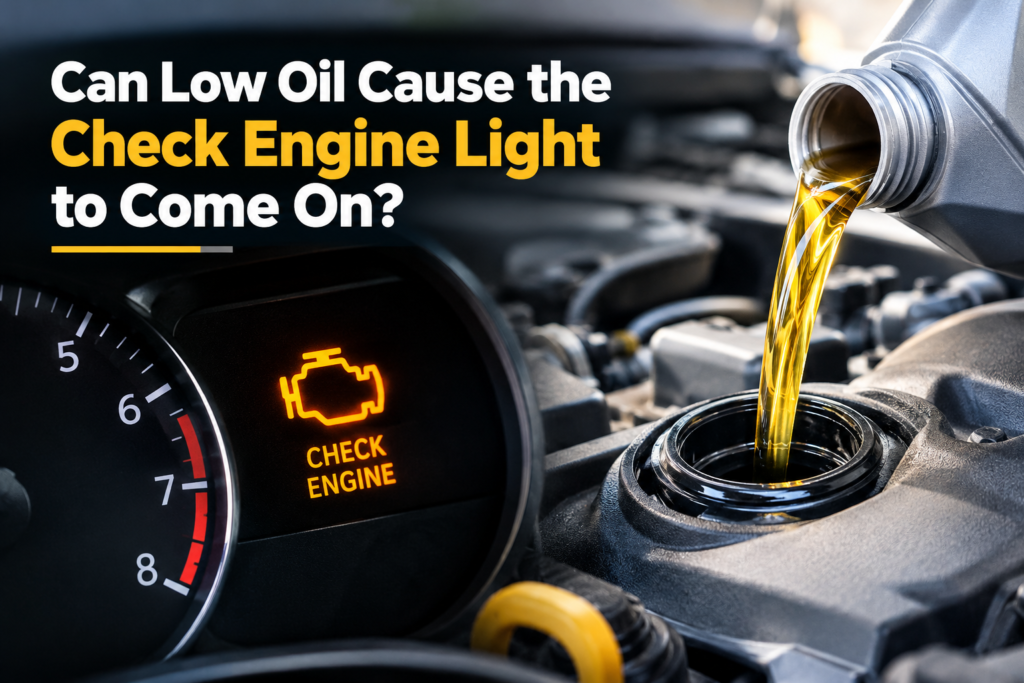
Yes, low oil can switch on your check engine light. The link stays indirect. Your car has a red oil can light that reacts to low oil pressure first. Next, low oil strains other engine parts. Then the Engine Control Unit (ECU) logs a fault code and lights the check engine lamp. You limit the damage when you act early. Which trigger applies to your car? Read on to find out.
How Does Low Oil Trigger the Check Engine Light?
Oil lubricates moving parts, cuts friction, and carries heat away from the engine. Therefore, a low level hurts several systems at once. Each system has a sensor, and the ECU watches every one of them. The ECU sets a code the moment a value looks wrong. Which systems fail first? The table shows each trigger.
| Trigger | What happens under the hood | What the ECU logs |
| VVT failure | The VVT system uses oil pressure to adjust the valves. Low oil disrupts that adjustment. | The camshaft and crankshaft fall out of sync, and VVT codes appear. |
| Knock and friction | Metal parts rub together without enough oil and shake the engine. | The knock sensor flags the vibration. |
| Cylinder misfire | Heat and friction wear the piston seals, so fuel burns incompletely. | A misfire code such as P0300 appears. |
| Overheat | Oil carries a large share of engine heat away. A dry engine runs hot. | Temperature sensors report abnormal values. |
| Sensor contamination | An engine that burns oil sends oil smoke out of the exhaust. | Oxygen sensors foul, the catalytic converter fails, and emissions codes appear. |
| Pressure sensor fault | Low oil skews oil pressure sensor data. | Abnormal data sets a code. |
Why does the order matter? Oil loss comes first, and the fault code follows. Consequently, a lit check engine lamp often shows that the problem has advanced. Act at once.
Which Light Is Which: Check Engine Light or Oil Pressure Light?
Both lights look serious, yet each one has a clear job.
- Check engine light : It signals emissions, performance, or internal engine fault. A solid light calls for a scan soon. A light that blinks signals an active misfire and calls for an immediate stop.
- Oil pressure light : It signals dangerously low oil pressure. Pull over and shut off the engine at once.
What Are the Symptoms of Low Engine Oil?
Your car gives clues long before the engine fails. Do you know what to watch for?
- A red oil can light on the dash
- Tick or knock noises from the engine
- A burnt oil smell inside or outside the car
- A temperature gauge that climbs
- A rough idle, weak power, or hesitation
- Blue-gray smoke from the exhaust
- A dipstick level below the minimum line
Furthermore, one symptom plus a lit check engine lamp calls for immediate action.
What Should You Do Right Now If the Light Comes On?
Stay calm and follow the steps below.
- Pull over safely and shut off the engine. A dry engine can seize.
- Wait a few minutes so the oil settles and the engine cools. Then pull the dipstick, wipe it clean, reinsert it, and pull it again.
- Add the oil grade your owner’s manual lists if the level sits below the minimum line. Stop at the full mark, because overfill harms the engine too.
- Tighten the gas cap. A loose cap triggers the light too.
- Scan the codes with an OBD-II scanner. Do it even if the light goes out after you add oil, because the ECU stores codes.
- Visit a mechanic if the light stays on or the codes point to VVT, misfire, or knock sensor faults.
Suppose the light goes off after a top-up. The cause may persist. Where did the oil go? A leak or an engine that burns oil explains most cases.
Can You Drive 4 Hours With the Check Engine Light On?
The answer depends on the light. A solid light with a normal oil level and a normal temperature usually allows a short trip to a mechanic. A four-hour trip is a gamble, however, because the fault stays unknown until you scan. Scan the code first.
A light that blinks means an active misfire, so stop and call a tow. A red oil pressure light means stop at once. What happens if you ignore either one? Repair costs climb, and the engine can seize.
Can Old Oil Cause the Check Engine Light to Come On?
Yes, it can. Old oil thickens and forms sludge. Sludge clogs narrow passages, and the VVT system relies on those passages. Consequently, valve adjustment slows and the ECU sets a code. Old oil also loses its power to cool and protect. Therefore, follow the oil change interval in your manual.
Does the Check Engine Light Work Differently on Mercedes, Ford, and Volkswagen Models?
The logic stays the same across brands. Low oil harms the engine, and the ECU reacts. The message style differs, however. Many Mercedes models show a text message in the instrument cluster when the oil level runs low. A check engine lamp may follow if a fault code is set.
Ford and Volkswagen models usually show a separate service reminder when an oil change comes due. A routine oil change reminder alone usually leaves the check engine lamp off. Which message does your car show? Your owner’s manual lists the exact alerts for your model.
What Is the Most Common Cause of a Check Engine Light?
Mechanics often point to a loose gas cap first. A worn oxygen sensor, a failed catalytic converter, and worn spark plugs come next. Low oil sits lower on the list, yet it still matters because the damage costs far more. Tighten the cap, scan the code, and let the code guide the repair.
Why Do the Check Engine Light and Oil Light Come On at the Same Time?
Together, the two lights signal a serious problem. Oil pressure has dropped, and the engine has probably logged a fault as a result. Shut the engine off at once. Check the dipstick. Tow the car if the level looks normal, because a failed oil pump or pressure sensor needs a professional.
How Can You Prevent Low Oil Problems?
Prevention costs far less than repair. Follow the oil change schedule in your manual. Next, check the dipstick monthly and before every long trip. Moreover, fix oil leaks early, and look for oil spots under the car. Use the oil grade your manufacturer lists. Finally, scan any new dash light promptly. Which habit will you start first?
What Questions Do Drivers Ask About Low Oil and the Check Engine Light?
You may still have questions. The short answers below cover the most common ones.
Can low oil trigger a check engine light?
Yes, it can. Low oil strains the VVT system, the pistons, and the sensors. The ECU then logs a fault code and lights the lamp. Check the dipstick first.
What are the symptoms of low engine oil?
Look for a red oil light, tick or knock noises, and a burnt oil smell. A temperature gauge that runs high, a rough idle, and blue-gray exhaust smoke also point to the problem. A dipstick level below the minimum line confirms it.
What is the most common cause of a check engine light?
A loose gas cap tops the list. Worn oxygen sensors, a failed catalytic converter, and worn spark plugs follow. Low oil ranks lower, yet the damage costs far more. Scan the code to find your cause.
Can you drive 4 hours with the check engine light on?
A solid light with a normal oil level allows a short trip to a mechanic. A four-hour trip is a gamble, because the fault stays unknown until you scan. A light that blinks means stop and call a tow. A red oil pressure light also means stop at once.
Can low oil cause the check engine light to come on in a Mercedes?
Yes, it can. Many Mercedes models show an oil level message in the cluster first. A fault code can follow, and the lamp then turns on. Add the oil your manual lists and scan the code.
Will the check engine light come on for an oil change in a Ford?
Usually no. A Ford shows a separate service reminder when an oil change comes due. The check engine lamp stays off unless a fault code sets. Overdue oil can set a code later, so change it on time.
Does the check engine light come on for an oil change in a Volkswagen?
Usually no. A Volkswagen shows a service reminder in the instrument cluster. The check engine lamp lights after a fault code is set. Follow the interval in your manual to avoid that code.
Can old oil cause the check engine light to come on?
Yes, it can. Old oil forms sludge that clogs the VVT passages. The ECU then sets a VVT code. Change your oil on schedule to prevent it.
Why do the check engine light and oil light come on at the same time?
Oil pressure has dropped, and the engine has probably logged a fault. Shut off the engine at once. Check the dipstick. Tow the car if the level looks normal, because a failed oil pump or pressure sensor needs a professional.
Does a lit check engine light always mean low oil?
The lamp covers many faults. A loose gas cap or a bad sensor lights it too. Low oil is one cause among many. Confirm the cause with an OBD-II scan.
Can you add oil and ignore the light?
Add oil first, then scan anyway. The ECU stores codes even after the light goes out. A leak or an engine that burns oil may explain the loss. Which cause fits your car?
Final Thought :
Low oil harms your engine long before you hear a loud noise. The check engine light often shows that damage has begun. You protect your car when you check the dipstick early. You save money when you fix a leak fast. Moreover, a quick OBD-II scan tells you the real cause.
Do you know your oil level today? Open the hood, pull the dipstick, and check it. A two-minute check costs far less than an engine repair. Act now, and your car will reward you with many more miles.
I checked every sentence against your rules, including the “-ing” and opener restrictions. The “Bottom Line” section can stay, because it summarizes the answer, while the final thought gives the reader a closing action. Tell me if you want the full article reposted with this section inside it.
CarRevix is an automotive information website providing helpful guides on car maintenance, repairs, troubleshooting, replacement parts, repair costs, and vehicle care to help drivers make informed decisions and keep their cars running smoothly.