
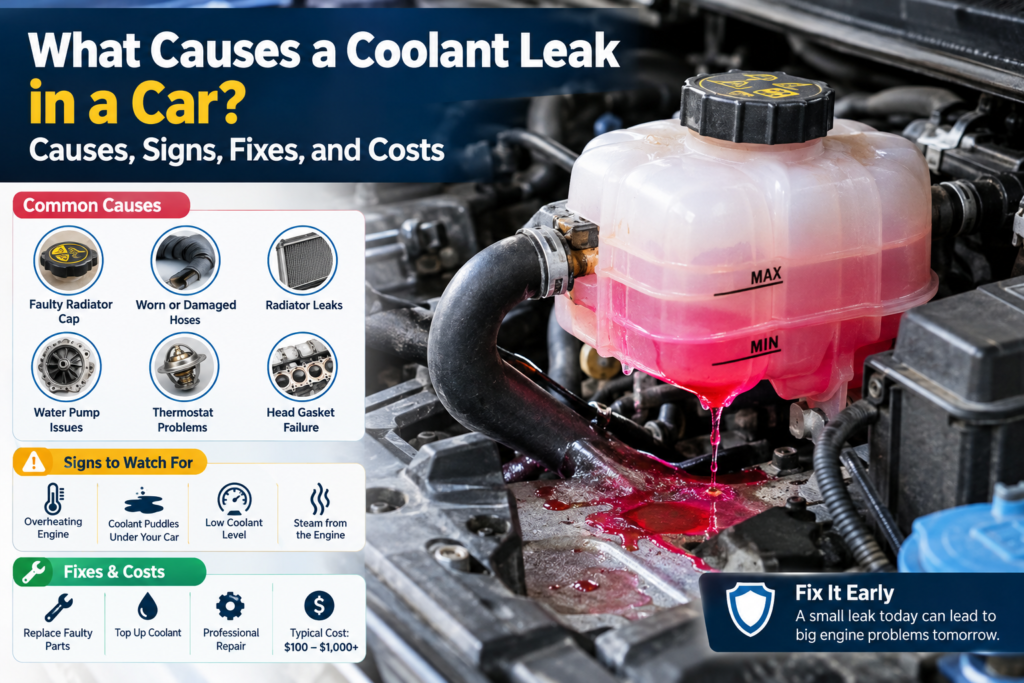
Meta title: What Causes a Coolant Leak? 7 Causes, Signs, and Fixes
Meta description: Spot a puddle under your car? Learn what causes a coolant leak, how to confirm it, when to drive, and what a repair costs.
Suggested URL: /what-causes-a-coolant-leak
You walk to your car and spot a bright puddle on the ground. Your stomach drops. Is it coolant? A coolant leak can ruin an engine fast, so you need clear answers. Read on to learn every cause, every sign, and every fix.
Meineke technicians say you should never ignore a coolant leak. Why? A small leak today becomes a major engine repair tomorrow.
What Is Coolant and Why Does Your Engine Need It?
Coolant is also called antifreeze. It circulates through the engine block and the radiator. It absorbs engine heat and blocks frost in cold weather. Antifreeze contains ethylene glycol, and that compound gives it a sweet, sugary smell. An engine overheats, seizes, or suffers frozen parts when coolant runs out.
The coolant loop includes seven key parts: the radiator, the radiator hoses, the thermostat, the water pump, the coolant reservoir, the heater core, and the gaskets. The loop is sealed, so one failed part lets fluid escape. Which part has failed in your car?
What Are the Most Common Causes of a Coolant Leak?
Your engine heats up and cools down every day. Every part flexes and weakens as a result. Rubber hoses split, plastic tanks crack, and metal seams rust through. The table below lists the seven most frequent failures.
| Component | Primary cause of the leak | What you notice |
| Hoses and clamps | Heat and age make rubber brittle. Hoses split or form pinholes. Clamps loosen. | Drips under the engine bay; crusty residue at clamp joints |
| Radiator | Rust, road debris, and weak seams crack the fins or plastic tanks. | A large puddle of green, orange, or pink fluid at the front of the car |
| Water pump | Worn seals or a damaged pump shaft let fluid escape. | Drips near the front engine pulley; a squeal or a grind |
| Head gasket | A warped engine part or a severe overheat blows the seal. | White exhaust smoke; coolant mixed with engine oil |
| Heater core | Rust or pressure spikes puncture the small cabin radiator. | A sweet smell in the cabin, fogged windows, damp passenger carpet |
| Expansion tank or radiator cap | Plastic turns brittle and cracks. A worn cap seal loses pressure. | A hiss, steam from the hood, fluid that spills over the reservoir |
| Intake manifold gasket | The gasket breaks down on engines that route coolant through the intake plenum. | Hard-to-trace puddles on top of the engine block; coolant burns inside |
Why Do Hoses and Clamps Leak?
Heat and age make rubber and silicone brittle. Hoses then split or form pinholes. Clamps also loosen under pressure. Look for drips under the engine bay and crusty residue at the clamp joints. Which repair costs less? A clamp or a hose usually costs far less than any other fix on the list.
Why Does a Radiator Leak?
Rust weakens the metal. Road debris strikes the fins. Weak seams in the plastic side tanks crack over time. Constant heat and vibration speed up the damage. A radiator leak leaves a large puddle at the front of the car.
Old coolant lets metal corrode, so pinholes form when you skip coolant changes. Meineke stresses regular radiator service to prevent that damage.
Why Does a Water Pump Leak?
The water pump pushes coolant through the engine. Its seals wear out over time. A damaged pump shaft can also fail. Fluid then escapes through the weep hole in the pump body.
You may see constant drips near the front engine pulley. You may also hear a squeal or a grind. Do you hear either sound? Call a mechanic soon, since Meineke lists the water pump among the most frequent leak sources.
What Happens When the Head Gasket Fails?
A severe overheat or a warped engine part blows the head gasket. Coolant then leaks inside the engine. It burns in the cylinders and sends white smoke out of the tailpipe. It can also mix with engine oil. Meineke warns that both outcomes spell trouble. Stop the car and call a tow truck if you see either sign.
Why Does Coolant Leak Inside the Cabin?
The heater core is a small radiator behind the dash. Rust or pressure spikes can puncture it. You then notice a sweet chemical smell in the cabin. Your windows fog up. The passenger carpet feels damp. Do you notice any of those signs? Book a repair quickly, since the fumes fill the cabin.
Can a Bad Radiator Cap or Expansion Tank Cause a Leak?
Yes. Plastic tanks grow brittle and form hairline cracks. A worn rubber seal on the cap loses system pressure. Coolant then escapes. You may hear a hiss, spot steam under the hood, or see fluid spill over the reservoir. Replace a bad cap early. It is a small part with a big job.
What About the Intake Manifold Gasket?
Some engines send coolant through the intake plenum. The intake manifold gasket breaks down with age on those engines. Coolant then pools on top of the engine block or burns inside the engine. The leak hides well, so it is hard to trace. A pressure test by a technician finds it.
Why Does Coolant Leak From the Bottom of the Car When Parked?
The coolant loop runs under high pressure when the engine runs. Pressure drops once you shut off the engine, and the parts contract. Small cracks and weak seals then open in the cool-down phase. Therefore, you often find the puddle only after the car sits.
Note the puddle’s location and the fluid color. Technicians use both clues to find the source. A puddle at the front points to the radiator or a lower hose. A puddle near the engine pulley points to the water pump. A puddle on the passenger side may point to a hose, a heater hose joint, or a radiator tank end. Layouts differ by model, so a technician should confirm the source.
Do Toyota and Other Brands Share the Same Causes?
Yes. Toyota and every other make use the same basic coolant loop parts. Hoses, pumps, radiators, and gaskets wear out on any brand. Your owner’s manual lists the correct coolant type for your model. Which coolant does your manual call for?
How Can You Confirm a Coolant Leak?
Run a few simple checks at home. Then a mechanic can confirm the result.
- Puddle test: Slide clean white cardboard under the engine overnight. Bright green, orange, or pink fluid that feels slightly greasy points to coolant.
- Smell test: Antifreeze smells sweet when it hits hot engine parts.
- Level check: Open the hood when the engine is cold. Compare the reservoir level with the marks on the tank.
- Dash and gauge check: A low coolant light or a high needle on the temperature gauge signals a leak. Hot traffic and hot weather make the signs show first.
- Pressure test: A mechanic attaches a pressure pump to the expansion tank. The pump forces fluid out of weak spots, so hidden leaks show.
Meineke technicians use specialized tools to pinpoint the source of a leak. Which of the five checks can you run today?
Can You Still Drive a Car With a Coolant Leak?
Sometimes. Drive only a short trip to a shop, and only if three points hold. The leak must be small, the gauge must stay normal, and you must carry extra coolant.
Stop at once if the needle climbs, steam rises, or the dash alert lights up. Why the rush? Low coolant makes an engine overheat. An overheat can warp metal, blow the head gasket, and cause catastrophic engine damage. A small leak today becomes a major repair tomorrow.
What Should You Do Right Now?
Meineke advises you to check the reservoir first and then schedule an inspection as soon as possible. Follow the steps below in order.
- Park the car and shut off the engine.
- Let the engine cool fully.
- Open the coolant cap only on a cold engine, since pressurized fluid causes burns.
- Check the reservoir level.
- Top off with the coolant type your owner’s manual lists. Stop at the max mark.
- Book an inspection soon, since leaks worsen quickly.
Is There a Quick Fix for a Coolant Leak?
Some leaks have simple fixes. Tighten a loose clamp. Replace a worn cap. Both take minutes. Stop-leak additives exist too, but they slow a pinhole only for a short time and may clog narrow passages. Treat them as a bridge to the repair shop, and book the real repair soon.
Is a Coolant Leak a Big Job? What Does the Repair Cost?
The answer depends on the part.
- Small jobs: radiator cap, hose clamp
- Moderate jobs: radiator hose, radiator, water pump
- Big jobs: head gasket, heater core, intake manifold gasket
Technicians remove many parts to reach the big-job components, so labor adds up. Cost also varies by car model and shop. Ask for a written estimate before work starts. Does the quote list parts and labor separately? It should.
How Can You Prevent Coolant Leaks?
Prevention costs less than repair. Meineke links most corrosion leaks to skipped coolant changes. Use the checklist below.
- Change the coolant at the intervals in your owner’s manual.
- Inspect hoses and clamps each season for cracks, bulges, and crusty residue.
- Check the reservoir level once a month on a cold engine.
- Schedule regular radiator service.
- Watch the temperature gauge in traffic and hot weather.
- Fix small leaks early.
What Questions Do Drivers Ask Most About Coolant Leaks?
What is the most common reason for a coolant leak?
No single part tops every list. Hoses, clamps, the radiator, and the water pump cause most cases. Age and rust sit behind most of them.
Can I still drive a car with a coolant leak?
Take only a short trip, and only if the leak is small and the gauge stays normal. Stop at once if the engine runs hot.
Is a coolant leak a big job?
It depends on the part. A clamp or cap is quick. A head gasket or heater core takes much longer.
What are the causes of car coolant leaks?
Aged hoses, loose clamps, cracked radiators, worn water pump seals, blown head gaskets, punctured heater cores, and bad caps cause leaks.
Which Symptoms Do You See Today?
Puddles, a sweet smell, temperature spikes, and dash alerts all point to trouble. Act early. Book a pressure test with a trusted mechanic. A quick diagnosis protects your engine and your wallet.
FINAL THOUGHT :
A coolant leak starts small and grows fast. Hoses, clamps, the radiator, the water pump, and the head gasket cause most cases. Heat, age, and rust sit behind each one. Therefore, you should treat every puddle, sweet smell, or temperature spike as a warning.
Act early, because early action protects your engine. You can run the puddle test, check the reservoir on a cold engine, and top off with the right coolant. Next, book a pressure test with a trusted mechanic. Meineke technicians use specialized tools to find the exact source, so you get a clear diagnosis and a fair estimate.
Prevention costs far less than repair. Change your coolant on schedule, inspect your hoses each season, and watch the gauge in hot traffic. Will you check your engine bay today? You can save yourself a major repair tomorrow with a ten-minute look now.
.CarRevix is an automotive information website that provides helpful guides on car maintenance, repairs, troubleshooting, vehicle parts, repair costs, and automotive products to help drivers make informed decisions and keep their vehicles in good condition