
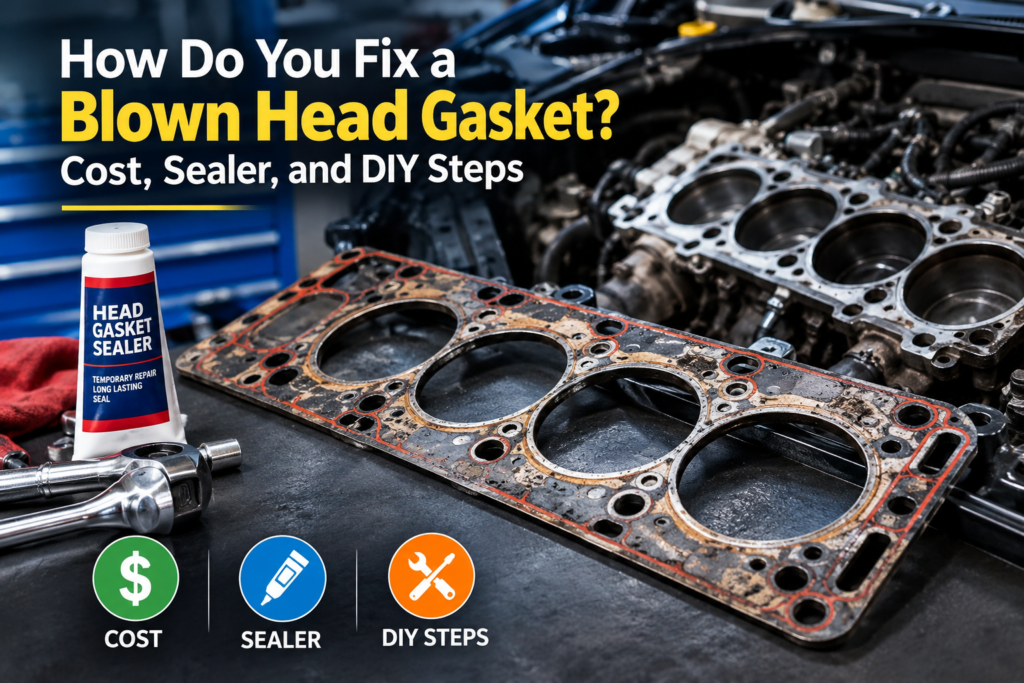
A blown head gasket can be one of the most expensive engine problems for car owners. Repair costs vary depending on the severity of the damage and the repair method you choose. A head gasket sealer may cost 20–60, while a DIY replacement can cost under $200 for parts. Professional repair at an auto shop typically ranges from $1,500 to $2,500 or more. In this guide, discover the common symptoms of a blown head gasket, what causes it to fail, how to diagnose the problem, and which repair option offers the best value for your car and budget. Learn when a temporary fix may help, when professional repair is necessary, and how to prevent further engine damage.
What Does a Head Gasket Do?
The head gasket sits between the engine block and the cylinder head. It seals combustion pressure inside the cylinders. It also keeps oil and coolant in separate passages. Heat, pressure, and vibration hit it every second the engine runs.
Manufacturers design it to last the life of the vehicle. Overheat events, however, destroy many of them. Why does the repair cost so much? The gasket is easy to swap. Reaching it is the hard part. Picture a jar of honey at the back of a full pantry. You must clear every shelf first.
What Are the Signs of a Blown Head Gasket?
Watch for the signs below:
- White smoke from the exhaust
- Slow coolant loss with no clear leak
- Oil and coolant leaks
- Engine overheat
A failed seal between the block and the head causes each sign. A mechanic can confirm the diagnosis before you spend money.
Why Does a Head Gasket Blow?
Overheat events cause most head gasket failures. A stuck thermostat, a broken water pump, a failed radiator fan, or a clogged radiator usually starts the chain. Heat then warps the cylinder head, and the seal fails.
Will a new gasket survive if you skip the root cause? No. It will blow again soon. Test each cooling part first, then pick your repair path.
Is It Possible to Fix a Blown Head Gasket?
Yes, you can fix it. Severity, budget, and skill decide the method. The table compares all three paths.
| Option | Cost | Time | Best for | Lifespan |
| Chemical sealer | 20–60 | About 1 hour | Minor leaks, tight budgets | A few months to a couple of years |
| DIY replacement | Under $200 | One day to a few days | Experienced DIYers with tools and garage space | Long, once you fix the root cause |
| Professional repair | 1,500–2,500+ | 10–20 labor hours | Daily drivers, severe damage | Most reliable |
Can You Still Drive a Car With a Blown Head Gasket?
Short trips may work if the engine holds a steady temperature. A sealer works best on a car that idles 20 minutes without a complete overheat. Does the temperature gauge climb fast? Park the car at once. Each overheat can warp the cylinder head. A machine shop resurface then adds $50 to $150 to your bill.
How Much Does It Cost to Fix a Blown Head Gasket?
You pay mostly for labor. Mechanics must remove the intake, belts, and pulleys first. As a result, shops charge $1,500 to $2,500 or more. Some estimates start near $1,200. The gasket alone costs only $25 to $90, but the job takes 10 to 20 hours.
You can cut the bill sharply. A DIY job needs under $200 in parts and supplies. AutoZone sells Bar’s Leaks and K-Seal for $20 to $50. BlueDevil Pour-N-Go costs about $60.
How Do You Fix a Blown Head Gasket With a Sealer?
Sealer suits minor leaks. Pick a reputable product at an auto parts store. BlueDevil, Bar’s Leaks, K-Seal, and Steel Seal all sit on the shelves. Read the label first, since directions differ by brand.
- Read the label. Most products call for a coolant drain, a water flush, and a refill.
- Keep the engine cold. BlueDevil Pour-N-Go asks you to drain 16 ounces from the radiator instead.
- Start the engine. Turn the heater to maximum. Put the transmission in park or neutral.
- Pour the sealer into the radiator slowly over one minute. Use the coolant reservoir if the label says so.
- Replace the radiator cap. Idle the engine for 15 to 50 minutes, as the label directs. BlueDevil asks for 50 minutes.
One 16-ounce BlueDevil bottle treats a four-cylinder or six-cylinder engine. The whole job takes about one hour. Will it solve your problem? Minor leaks often respond well.
How Long Does a Head Gasket Sealer Last?
A sealer works as a band-aid. It typically lasts a few months to a couple of years. Severe gasket damage and a warped cylinder head need a full replacement. Did the sealer fail? Then the damage runs deeper than a simple leak, and you should book a shop visit.
How Do You Replace a Head Gasket Yourself?
You need advanced tools, garage space, and a few free days. Get the factory repair manual first. Wear gloves and goggles. Secure the car on a lift or set the emergency brake.
- Disconnect the battery. Drain the engine oil and coolant.
- Remove the fan shroud. Then remove the plenum chamber at the throttle body.
- Remove the fan. Some fans need a large, special wrench.
- Photograph the serpentine belt path. Then remove the belt, the pulleys, and the water pump.
- Unbolt the A/C compressor and move it aside. You can leave it connected.
- Unhook the spark plug wires, hoses, and wires. Release the fuel line if needed.
- Remove the intake and exhaust manifolds, the camshaft belt or chain, and the valve covers.
- Pull the spark plugs. Loosen the cylinder head bolts and track their order. Bag and label each set.
- Lift off the cylinder head. Ask a helper, because the head is heavy.
How Do You Inspect and Clean the Surfaces?
Scrape off the old gasket with a plastic or brass scraper. Metal tools gouge the surface. Check the head and block for cracks and corrosion. Lay a precision straightedge across the head and compare the gap to the manual’s tolerance.
Does the head show a warp? Take it to a machine shop for a $50 to $150 resurface. Otherwise, the new gasket will blow right away. Clean the head with a toothbrush. Wipe the cylinder walls with an oil-soaked rag.
How Do You Install the New Head Gasket?
Lay the new gasket dry with the correct side up. Lower the head into place. Follow the manual’s bolt sequence and torque specs with a calibrated torque wrench. Over-torque cracks parts. Under-torque leaves the seal loose. Many engines call for new torque-to-yield bolts, so confirm in the manual.
Reassemble in reverse order. Change the oil filter and pour in fresh oil. Refill the coolant system and bleed the air out before you start the engine. Flush both fluids first, since leaks usually tipped you off to failure.
How Does a Professional Head Gasket Repair Work?
A mechanic strips the top end of the engine. A machine shop checks the cylinder head for warps and cracks. The mechanic cleans the surfaces and installs a new gasket with new torque-to-yield bolts. Expect $1,500 to $2,500 or more. Choose this path for a daily driver or severe damage.
Which Fix Should You Choose?
- Choose a sealer when you see minor white smoke or slow coolant loss, and the car idles 20 minutes without a complete overheat.
- Choose DIY when you own the tools, have garage space, and can spare a few days.
- Choose a shop when you rely on the car daily or the damage runs deep.
Which path matches your car today? Pick one, fix the root cause, and your engine will last for years.
FAQs:
Is it possible to fix a blown head gasket?
Yes, you can fix it. You have three paths: a pour-in sealer, a DIY replacement, or a professional repair. Minor leaks respond to sealers. Severe damage or a warped cylinder head needs a full replacement.
Can you still drive your car with a blown head gasket?
You can drive short distances if the engine holds a steady temperature. Park the car at once if the gauge climbs fast. Each overheat risks a warped head. Would you gamble a $50 to $150 machine shop bill on one more trip?
How much does it cost to fix a blown head gasket?
A shop charges $1,500 to $2,500 or more, and some estimates start near $1,200. A DIY job costs under $200. A sealer costs $20 to $60. The gasket costs only $25 to $90, so labor drives the price.
Which head gasket sealer should you buy?
AutoZone and similar stores stock BlueDevil Pour-N-Go, Bar’s Leaks, K-Seal, and Steel Seal. Prices run from $20 to $60. Read the label first, since directions differ by brand.
How long should you idle the engine after you add sealer?
Idle times run from 15 to 50 minutes, depending on the brand. BlueDevil Pour-N-Go asks for 50 minutes with the heater on maximum. Check your bottle for the exact time.
Final thought:
A bad water pump gives you clear signs. A leak, a whine, a hot gauge, or steam each tells you to act. Which sign did you notice first?
Speed decides your cost. A pump replacement runs $400 to $800 at a typical shop. A seized engine can reach $5,000 to $10,000. Early action keeps you at the low end of that range.
Your plan is simple. Check the coolant level on a cold engine each month. Look for crust and drips on the pump once a year. Change coolant every 60,000 to 100,000 miles, or follow your owner’s manual. Pull over and tow the car if the gauge hits the red zone or steam appears.
Do you want to protect your engine and your budget? Book a pressure test at the first symptom. A small repair today prevents a large bill later.
CarRevix is an automotive website that provides helpful information about car maintenance, engine problems, repairs, troubleshooting, and vehicle care. It also covers automotive SEO, guest posting, link building, and promotional content to help automotive businesses improve their online visibility and reach more customers.