
Meta description: Your car overheats on the road? Learn the alert signs, safe steps, top causes, quick fixes, and repair costs. Protect your engine today.
Focus keyword: car overheating
Secondary keywords: engine overheating causes, car overheating while driving, car overheating at idle, overheating but coolant full, temporary fix for overheating car
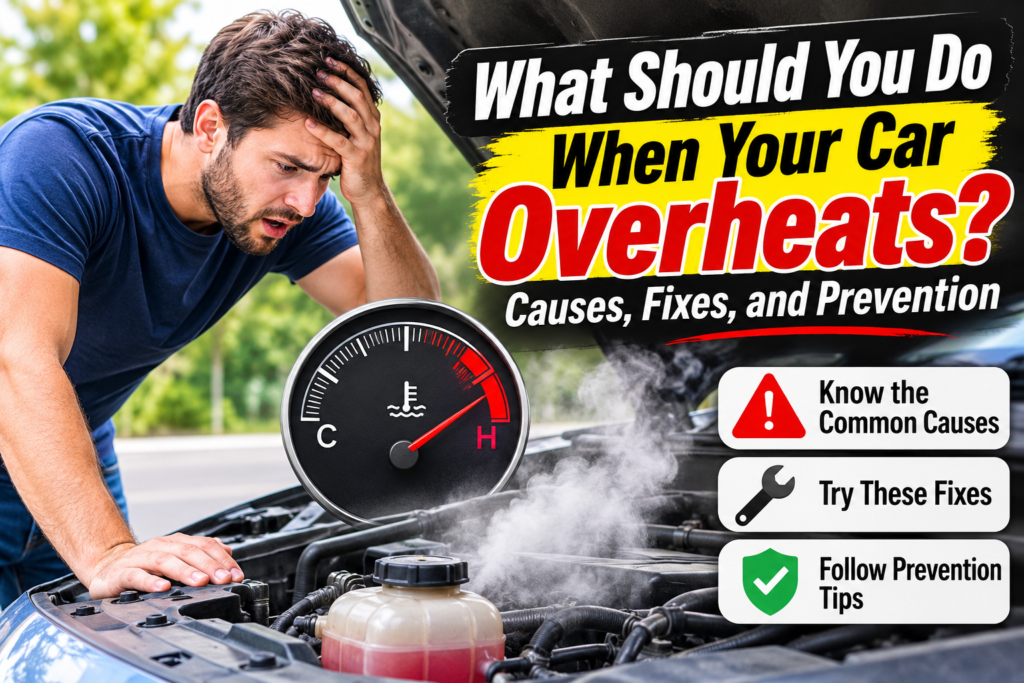
Your temperature gauge climbs. Steam rises from the hood. Panic sets in fast. What should you do next?
An engine makes intense heat. The coolant system removes that heat before it harms metal parts. Coolant absorbs heat in the engine block. The water pump pushes the hot fluid to the radiator. The fan and the airflow pull the heat out of the fluid.
A healthy engine runs near 195°F to 220°F. Higher temperatures stress the engine fast. Aluminum cylinder heads can warp. Head gaskets can fail. Pistons can seize.
How common is the problem? The American Automobile Association (AAA) cites about 69 million vehicle breakdowns in the U.S. each year. That adds up to roughly 189,000 per day and an estimated $44 billion in cost to drivers. Cars older than 10 years break down twice as often as newer cars. They also need a tow four times as often.
What Are the Alert Signs That Your Car Overheats?
Your car usually signals trouble before it fails. Watch for these signs:
- The temperature gauge climbs above the middle mark.
- A red temperature light appears on the dashboard.
- Steam or white vapor rises from under the hood.
- A sweet, syrup-like smell comes from the engine bay. Ethylene glycol coolant smells that way.
- The engine loses power or runs rough.
- The heater blows cold air although the engine is warm.
- You hear hiss, knock, or tick sounds.
- Green, orange, or pink puddles form under the car.
Do you see any of these signs? Act at once. A small repair can grow into a bill of thousands within days.
What Should You Do If Your Car Overheats While You Drive?
Stay calm. Follow these steps in order:
- Turn off the A/C. The compressor adds load to the engine. Less load means less heat.
- Turn the heater to full hot and the fan to high. The heater core works as a small second radiator. It pulls heat away from the engine.
- Find a safe spot. Use the shoulder, an exit ramp, or a parking lot. Switch on your hazard lights.
- Shift to park and shut off the engine. Idle time adds more heat to a hot engine.
- Wait 30 to 45 minutes. The engine needs full time to cool.
- Never open the radiator cap on a hot engine. The system holds pressure, and scalding coolant can spray out.
Why does pressure matter? Radiator caps hold about 13 to 16 psi. Each psi raises the boil point of coolant by roughly 3°F. That pressure keeps coolant liquid well above 212°F. A hot cap release drops the pressure at once. The coolant then flashes to steam and sprays.
Should you pour cold water on a hot engine? No. Sudden cold can crack the engine block or the cylinder head. Let the engine cool on its own.
Is There a Temporary Fix for an Overheated Car?
Yes. Treat every temporary fix as a short bridge to a repair shop. A quick fix hides the root problem and does not solve it.
Add coolant after the engine cools. Wait until the engine feels cool to the touch. Open the reservoir cap slowly with a thick cloth. Pour in a 50/50 mix of coolant and distilled water. Plain water works in an emergency. It lowers the boil point and weakens rust protection. Replace it with the proper mix soon.
Keep the heater on high. The heater core pulls heat from the coolant. Your cabin will feel hot, but the engine will stay cooler.
Drive short distances only. Aim for the nearest garage. Stop again if the gauge rises.
Skip stop-leak additives. Some products seal small leaks. Others clog the radiator and the heater core. A mechanic then needs extra labor to clean the system.
Call a tow truck if you doubt the car can make it. A tow costs far less than a ruined engine.
What Causes a Car to Overheat?
Engine overheating causes fall into a few clear groups. Which one fits your car?
Is Low Coolant the Most Common Cause?
Yes, in most cases. Coolant carries heat away from the engine. Leaks start at hoses, the radiator, the water pump, the heater core, and the thermostat seal. Small leaks drip slowly, so many drivers miss them. Check the reservoir once a month.
Can a Stuck Thermostat Overheat the Engine?
Yes. The thermostat opens and closes to control coolant flow. A thermostat stuck closed traps hot coolant in the engine. The gauge then climbs within minutes of a cold start. The upper radiator hose may stay cool while the engine runs hot. That mismatch points to the thermostat.
Can a Dead Radiator Fan Cause an Overheat?
Yes. The fan pulls air through the radiator at low speed and at idle. A bad motor, relay, fuse, or temperature sensor can stop it. Your car may run fine on the highway and overheat in traffic.
How Does a Failed Water Pump Raise Engine Heat?
The pump circulates coolant through the engine. A worn shaft seal, a loose belt, or damaged vanes reduce flow. A snapped serpentine belt stops the pump at once. Listen for a whine at the front of the engine. Look for drips near the pump pulley.
Can a Clogged Radiator Trap Heat?
Yes. Rust, scale, and old coolant sludge block the thin radiator tubes. Bugs, leaves, and road debris block the outer fins. Both problems cut heat release.
Can Air Pockets Raise Engine Heat?
Yes. Air trapped in the coolant passages creates hot spots. Air often enters after a coolant change or a repair without proper bleed steps. A mechanic can bleed the system and restore even flow.
Can a Weak Radiator Cap Cause Trouble?
Yes. A weak cap cannot hold pressure. The coolant then boils at a lower temperature. A new cap costs about $10 to $30 and fixes the problem more often than most drivers expect.
Can a Worn Hose Cause an Overheat?
Yes. Old hoses soften inside and collapse under suction. Debris and rust also restrict flow. Squeeze each hose when the engine is cold. A good hose feels firm, not mushy or crunchy.
What Does a Blown Head Gasket Do?
The head gasket seals the engine block to the cylinder head. A failed gasket lets combustion gas enter the coolant. It can also let coolant enter the cylinders. Look for white exhaust smoke, bubbles in the reservoir, and milky oil. Repairs often run $1,000 to $2,500 or more. Early action keeps the bill lower.
Why Does Your Car Overheat When the Coolant Is Full?
A full reservoir tells you little about flow. Several faults hide behind a full tank:
- A stuck thermostat blocks flow no matter how much coolant sits in the system.
- A failed water pump moves little fluid even when the level looks fine.
- A broken fan leaves the radiator hot at low speed.
- A clogged radiator limits heat release.
- A head gasket leak pushes coolant out and combustion gas in.
- A faulty temperature sensor sends a false reading. The engine may run normal while the gauge reads high.
- Air pockets disrupt circulation despite a full reservoir.
Did someone overfill the reservoir? The true level lives in the radiator. Check it only when the engine is cold.
Why Does Your Car Overheat at Idle?
Idle overheats point to airflow. At highway speed, wind pushes air through the radiator. At idle, the fan does all the work. A weak fan, a bad relay, or a clogged radiator shows up fast. A thin coolant mix, a tired water pump, or a bad thermostat can add to the problem.
Try a simple test. Watch the gauge in traffic. Then watch it on an open road. Suspect the fan or the radiator first if the gauge drops once you speed up.
Why Does Your Car Overheat All of a Sudden?
Sudden overheats usually trace back to one abrupt failure. Common triggers include:
- A burst hose that dumps coolant in seconds
- A snapped serpentine belt that stops the water pump
- A fan relay or fuse that fails without notice
- A thermostat that sticks shut
- A steep climb or a heavy trailer in extreme heat
Pull over right away if the gauge spikes. Do not try to reach home first.
What Are 3 Simple Checks You Can Do Right Now?
You need no special tools for a basic check. Start here after the engine cools:
- Check the coolant level. Read the marks on the reservoir. Then check the radiator itself with the engine cold.
- Look for leaks. Scan the ground and the hoses. Wet spots, crusty residue, and colored drips point to the source.
- Test the fan. Start the engine and turn on the A/C. Most electric fans spin up when the A/C runs. A silent fan signals a fault.
These checks solve or narrow down many cases in minutes. Which one reveals your problem?
How Much Does It Cost to Fix an Overheated Car?
Costs vary by vehicle, labor rate, and failed part. Typical ranges look like this:
| Repair | Typical cost range |
| Radiator cap | $10 to $30 |
| Coolant flush | $100 to $200 |
| Thermostat replacement | $150 to $350 |
| Radiator fan or relay | $200 to $600 |
| Water pump replacement | $400 to $900 |
| Radiator replacement | $400 to $1,200 |
| Head gasket repair | $1,000 to $2,500 or more |
Small repairs cost little. Engine damage costs a great deal. That gap explains why early action pays off. Ask a shop for a written quote on your exact vehicle.
How Can You Prevent Car Overheats?
Prevention costs far less than repair. Build these habits:
- Check coolant monthly. Do it with a cold engine.
- Use the right coolant. Your owner’s manual lists the correct type. Mixed types can form gel and clog passages.
- Keep a 50/50 ratio. Use distilled water. Tap water leaves mineral deposits.
- Flush on schedule. Many makers suggest a flush every 30,000 to 60,000 miles or every five years. Check your manual for the exact interval.
- Inspect hoses and belts. Replace any that look cracked, bulged, or glazed.
- Clean the radiator fins. Remove bugs and debris at each car wash.
- Replace the radiator cap every few years. A weak cap costs little to swap.
- React to the first sign. A rising gauge is a message. Read it early.
- Respect load limits. Trailers and heavy cargo add heat. Stay inside your vehicle rating.
- Service older cars more often. Remember the AAA finding on cars older than 10 years.
Do you drive in extreme heat? Test your coolant system before summer. Hot weather exposes weak parts fast.
When Should You Call a Mechanic or a Tow Truck?
Call a professional in any of these cases:
- The gauge hits the red zone more than once.
- You see steam or smell hot coolant.
- Coolant disappears with no visible leak.
- You notice white exhaust smoke or milky oil.
- The fan never turns on.
- The problem returns after you add coolant.
Never drive on to see if the problem clears up. Engine metal can warp within minutes. A mobile mechanic can diagnose many faults at your location and may save you a tow.
FAQs:
Can you drive a car that overheats?
No. Stop as soon as it is safe. A hot engine can suffer permanent damage.
How long should you wait before you add coolant?
Wait at least 30 to 45 minutes. The engine and the radiator cap must feel cool to the touch.
Can low oil cause an overheat?
Yes. Oil lubricates moving parts and carries away some heat. Low oil raises friction and temperature.
Does the heater really help?
Yes. The effect is modest, but it can buy you time to pull over.
Can a bad sensor fake overheat?
Yes. A faulty coolant temperature sensor can send false readings. A mechanic can confirm the real temperature with a scan tool or an infrared thermometer.
Is the car safe after overheating?
It depends. A mild event may cause no harm after a proper repair. A severe event can damage the head gasket or the cylinder head. Ask a shop to run a pressure test and a combustion gas test
Final Thought:
Your engine gives you a clear alert before it fails. The gauge rises, steam appears, and a sweet smell fills the air. You hold the power to act at that moment.
Remember the core steps. Turn off the A/C. Turn the heater to full hot. Pull over and shut off the engine. Wait 30 to 45 minutes before you open the hood. Then check the coolant level, look for leaks, and test the fan.
Why does speed matter so much? AAA data shows about 69 million breakdowns hit U.S. drivers each year. Cars older than 10 years need a tow four times as often as newer cars. Overheats add to that total. A $20 radiator cap or a $200 thermostat costs far less than a $2,500 head gasket job.
Prevention wins every time. Check your coolant monthly. Keep a 50/50 mix of coolant and distilled water. Flush the system on schedule. Replace worn hoses, belts, and caps early. Service older cars more often.
Do you want to protect your engine today? Book a coolant system inspection with a qualified mechanic this week. A short visit now saves you a tow, a large bill, and a long wait on the roadside. Stay safe, and keep your eyes on that gauge.
CarRevix is an automotive website that provides helpful information about car maintenance, engine problems, repairs, troubleshooting, and vehicle care. It also covers automotive SEO, guest posting, link building, and promotional content to help automotive businesses improve their online visibility and reach more customers