
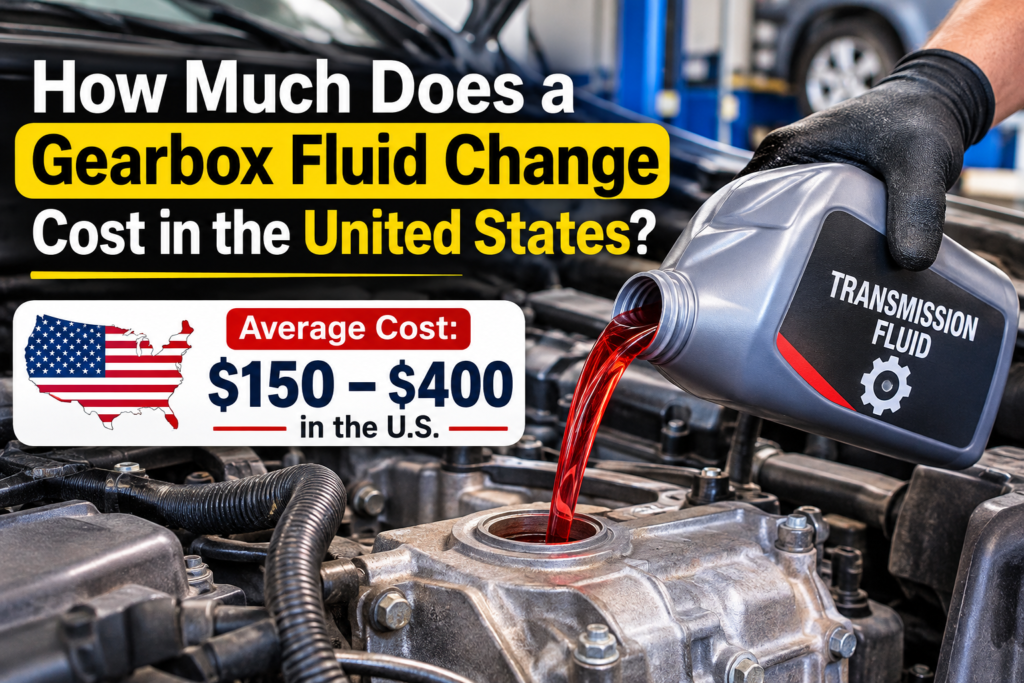
Wondering how much a transmission fluid change costs? Most drivers can expect to pay between $150 and $400 for a standard automatic transmission service, while a drain-and-fill typically costs $294 to $356. A filter and fluid replacement may range from $621 to $785. Manual transmission services are generally more affordable, costing around $80 to $150. Want to save money? A DIY transmission fluid change can cost as little as $30 to $120. Learn about the different service options, repair costs, and ways to keep your transmission running smoothly without overspending.
How Much Does Each Service Type Cost?
Service type changes the price more than any other factor. Compare your options below.
| Service | U.S. cost | What the shop does |
| Manual gearbox oil change | $80 to $150 | Swaps old gear oil for new oil |
| Automatic drain-and-fill | $150 to $356 | Drains the pan and refills it |
| Filter-and-fluid service | $500 to $785 | Removes the pan, swaps the filter and gasket, adds fresh fluid |
| Full flush or machine exchange | $150 to $599 | Pushes new fluid through the converter and cooler lines |
| CVT, dual-clutch, or luxury service | $300 to $700+ | Uses specialty fluid, often with a scan tool |
| DIY | $30 to $120 | Covers fluid and a gasket kit only |
Why do the ranges overlap? Sources sample different regions, shops, and vehicles. Quick-lube chains advertise exchanges from about $60. Confirm that the quote covers the correct fluid, because the final bill often rises once the shop adds it.
How Much of the Bill Is Parts and How Much Is Labor?
RepairPal splits a drain-and-fill into about $163 in parts and $131 to $192 in labor. The filter-and-fluid job costs more on both sides. Parts run $282 to $288, and labor runs $339 to $497. The extra labor pays for pan removal, a new gasket, and a filter swap.
An oil change costs $160 to $188 in the same dataset. Therefore, the basic transmission job costs nearly double. The shop must drop the pan, while an oil change needs only one drain plug.
What Factors Change Your Price?
Six factors move the number. Which one applies to your car?
- Transmission type. Automatics, manuals, CVTs, and dual-clutch units each need a different fluid and procedure.
- Fluid type. Standard ATF costs little. Proprietary synthetic fluids, such as ZF-spec or maker-specific CVT fluid, raise the parts cost fast.
- Service scope. A drain-and-fill, a filter service, and a flush sit at three price levels.
- Sealed design. Many newer cars have no dipstick. The shop fills the unit from below on a lift and tracks fluid temperature with a scan tool. That extra work adds labor time.
- Vehicle size. Trucks, SUVs, and European luxury cars hold more fluid and often need costlier formulas.
- Shop type. Quick-lube and big-box centers charge the least. Independent shops sit in the middle. Dealers charge the most.
Why Does Fluid Type Matter So Much?
A CVT needs friction. Its steel belt and pulleys must grip each other. A conventional automatic needs the opposite, so its gears glide. Jalopnik makes this contrast clear. ATF in a CVT leaves the belt without enough grip. CVT fluid in an automatic makes the gears drag.
Manual gearboxes use a third product. Wikipedia explains that gear oil carries extreme-pressure and anti-wear additives that protect hypoid gears from wear. RepairPal adds that transmission fluids are rarely interchangeable. Always confirm the exact specification before you approve the work.
Should You Choose a Drain-and-Fill, a Filter Service, or a Flush?
Each method has a clear role.
- Drain-and-fill: Most drivers pick this option. It replaces roughly 30% to 60% of the fluid, because the rest stays in the converter and cooler lines.
- Filter-and-fluid service: Maintenance schedules favor this option. It adds a new filter and pan gasket. The gasket is the most common source of transmission leaks, according to RepairPal.
- Flush: A machine replaces nearly all the fluid. Some makers approve it. Some mechanics advise against it on high-mileage cars with no service history.
Read your owner’s manual first. Ask for a second opinion if a shop pushes a flush.
How Often Should You Change the Fluid?
Your owner’s manual sets the final interval. AAA offers typical bands:
- Automatic: 60,000 to 100,000 miles
- CVT: 60,000 to 100,000 miles
- Manual: 30,000 to 60,000 miles
- Dual-clutch: 30,000 to 60,000 miles
Shorten the interval if you tow often, live in a hot or mountain area, or crawl through stop-and-go traffic. Heat, age, and pressure wear down the fluid over time, says RepairPal. Worn fluid leaves moving parts exposed to damage.
What Signs Show the Fluid Is Overdue?
Color tells you the most. AAA says healthy fluid looks bright red or pink. Brown or black fluid, or a burnt smell, signals a change. Watch for these signs:
- Dark fluid or a burnt smell
- Grinding, clunks, or whines at gear changes
- Slow or delayed gear changes, especially from park to drive
- Red or brown puddles under the car
- A burnt odor from the hood
Do any of those signs prove a fluid problem? Not always. Other faults cause the same symptoms. Ask the shop to check the fluid and diagnose the cause. A failed transmission costs far more than a fluid service.
Is 100,000 Miles Too Late to Change Transmission Fluid?
Not at all. Many makers schedule service near that mark, so it is a sound time to act. Perhaps the fluid has never changed and the car shifts poorly. Ask a trusted shop to inspect the fluid first. Then decide on a flush together.
Can You Change the Fluid Yourself?
A DIY job costs $30 to $120 in materials. Follow four rules.
- Let the car cool. Fluid can pass 200°F and burn you.
- Park on level ground. A tilt gives false level readings and can cause slips.
- Use lint-free towels. Dirt harms a transmission.
- Skip sealed units. You need a scan tool to hit the correct fill level.
Castrol and Valvoline both publish step-by-step guides for your vehicle type.
Does Walmart Change Transmission Fluid, and What Does It Cost?
Some Walmart Auto Care Centers offer fluid exchanges from about $60. Prices and services vary by store. Call ahead to confirm the service, the fluid, and the final total.
What Should You Ask Before You Approve the Work?
- Does the quote name the service: drain-and-fill, filter-and-fluid, or flush?
- Which fluid does my transmission require, and will you use it?
- Did you check the fluid’s color, smell, and level before you quoted?
- Does your interval match my owner’s manual?
- Has someone diagnosed my leak or shift problem separately?
How Can You Save Money on the Service?
- Get three quotes for the same scope of work.
- Ask for an itemized quote that splits parts and labor.
- Follow the manual’s schedule, not a generic one.
- Bundle the service with other scheduled maintenance.
- Buy OEM-spec fluid. Cheap wrong fluid costs far more than it saves.
FAQs:
How much does a transmission fluid change cost?
Expect $150 to $400 for an automatic, $80 to $150 for a manual, and up to $785 or more with a filter or specialty fluid.
Why is a transmission fluid exchange so expensive?
It takes more labor than an oil change and uses more fluid. Sealed units also need a lift and a scan tool.
Is a flush better than a drain-and-fill?
A flush replaces more fluid. Your manufacturer’s advice should decide the choice.
Can you mix ATF and CVT fluid?
No. Each fluid suits one design, and the wrong one damages parts.
Final Thoughts:
You now have the numbers. Most U.S. drivers pay $150 to $400 for an automatic service. A manual gearbox costs $80 to $150. RepairPal’s September 2026 data puts a filter-and-fluid job at $621 to $785. A DIY job costs $30 to $120.
Do you know which service your car needs? Start with your owner’s manual. AAA places most automatic and CVT intervals between 60,000 and 100,000 miles. Manual and dual-clutch units need fresh fluid sooner, at 30,000 to 60,000 miles.
Fluid type sets the final bill. A CVT, a dual-clutch unit, and a luxury model each need a specific fluid. The wrong fluid damages parts and costs far more than the service itself. Ask the shop to name the fluid on the quote.
Fresh fluid protects one of the costliest parts of your car. A fluid service costs a few hundred dollars. A transmission replacement costs thousands. Which bill would you rather pay?
Take three steps today. Get three itemized quotes. Confirm the fluid type. Book the service before your next long trip. Share your car’s year, make, model, and transmission type, and I will narrow the estimate for you.
CarRevix is an automotive-focused platform providing informative car maintenance guides, repair advice, vehicle care tips, and automotive industry insights. It also helps automotive brands and businesses grow through guest posting, premium backlinks, link insertion, sponsored content, and SEO solutions. Whether you are a car enthusiast, vehicle owner, or automotive business, CarRevix delivers useful information and targeted digital marketing opportunities to keep you informed and help your brand move forward.